Save Our Bones Increase your bone density naturally without cost, pills, or pain. The internet's #1 resource for natural osteoporosis treatment. 2012-05-17T09:54:09Z http://saveourbones.com/feed/atom/ WordPress Vivian Goldschmidt, MA <![CDATA[Crave Cake? Eat This for Your Bones Instead!]]> http://saveourbones.com/?p=11311 2012-05-17T09:54:09Z 2012-05-17T09:45:11Z Let them eat cake! According to legend, this is how Queen Marie Antoinette of France responded to the plight of peasants who didn’t have bread. Besides showing the sad disconnect between royalty and reality, the statement also points to the inescapable truth that just about everyone loves cake.

If you have ...]]>

Let them eat cake! According to legend, this is how Queen Marie Antoinette of France responded to the plight of peasants who didn’t have bread. Besides showing the sad disconnect between royalty and reality, the statement also points to the inescapable truth that just about everyone loves cake.

If you have the Save Our Bones Program, you know that you can eat all foods in the right balance. Cake, however, poses a slight challenge because its basic ingredients are mostly acidifying.

And I sometimes crave something sweet and mushy like cake, but at the same time, I’d rather it be perfectly balanced and bone healthy. Not long ago I discovered that my local supermarket was making fresh peanut butter at the deli counter. Enticed by the delicious smell, I decided to try some.

When I got home I opened the small plastic tub and tasted the creamy concoction. It was absolutely delicious! And right on my kitchen countertop was a large basket filled with fruit. I grabbed a banana, peeled it, and spread the peanut butter on it. It really tasted like cake! And the best part is that this delicious melange is a perfect 80/20 balance.

I still indulge and eat real cake every now and then, but the banana and peanut butter treat is my new guilt-free anytime cake substitute. I hope you’ll try it soon.

Enjoy it in good health!

]]>
34
Vivian Goldschmidt, MA <![CDATA[Mainstream Media Warns Against Bisphosponate Therapy]]> http://saveourbones.com/?p=11300 2012-05-14T19:44:18Z 2012-05-14T05:54:33Z In the early part of the 20th century, doctors recommended tobacco smoking as a digestive aid and for relaxation. And that’s not all. Doctors were featured in cigarette ads! Of course, that has changed and nowadays doctors try to get their patients to quit smoking.

In Chapter 5 of the Save ...]]>

In the early part of the 20th century, doctors recommended tobacco smoking as a digestive aid and for relaxation. And that’s not all. Doctors were featured in cigarette ads! Of course, that has changed and nowadays doctors try to get their patients to quit smoking.

In Chapter 5 of the Save Our Bones Program I write that:

“Osteoporosis is a perfect example that could be compared to the cigarette debacle. What doctors consider ‘common sense’ prevention and treatment of osteoporosis today, may end up like the story of cigarettes.”

Based on a study just published on May 9th in the New England Journal of Medicine, it looks as though we are slowly but surely getting there.1

Watch this video about the study:

video platform
video management
video solutions
video player

My Take

In their analysis of the FLEX trial, which reviewed results of 10 years with bisphosphonate therapy, researchers conclude that those taking the drugs had a minute benefit when compared to those taking placebos. And they openly question the fracture-prevention benefit of continuing bisphosphonate therapy for more than five years.

Their latest recommendation is that those who need continued bisphosphonate therapy, should be evaluated on a periodic basis.

And for the first time ever, they caution doctors against prescribing a variety of osteoporosis drugs, since the trend appears to be that when one drug doesn’t give results, another similar one is prescribed:

“Clearly, given the potential for cumulative risk, caution should be exercised in switching between bisphosphonates and other potent antiresorptive medications.”1

Don’t Be A Slave to Osteoporosis Drugs

Many Save Our Bones community members have shared their bad experiences with osteoporosis drugs, after taking different ones without any positive results. Once they stopped the drugs, they successfully got rid of osteoporosis with the Save Our Bones Program.

Here’s a perfect example, sent by Neita D. on March 15, 2012:

I have had osteoporosis for 5 years. I started on Boniva per my doctor. Two years ago my doctor took me off of Boniva and wanted me to take Actonel because my scores kept going down. So, I started doing my own research. I took myself off of Boniva and never started Actonel. That is when I ordered your book. I began the habit of walking every day and eating more and more vegetables. My osteoporosis has improved to osteopenia, even though my doctor only gives credit to the previously taken Boniva. Thanks for improving my health with your recommendations. I am a firm believer in this program.”

Reverse Osteoporosis Fast!

And about the “wisdom” of not pursuing bisphosphonate treatment for more than five years, the question is, why should it take five years to reverse osteoporosis in the first place?

You already know that I reversed my osteoporosis in one year, and I’m not the only one. Take a look at what Jean S. wrote on November 2, 2011:

Hi Vivian thanks for all the updates etc. Thought you may be interested to hear that recent bone scan proves I no longer have osteoporosis. Now reduced to osteopenia. This has changed in the 14 months, since I stopped taking bisphosphonates, and followed your way of eating. I feel very well.”

And this is just one example. Go here to read more success stories from Save Our Bones community members.

And if you’re still taking osteoporosis drugs, make sure you watch the RESTORE video, where I reveal the RESTORE secret and how it can rebuild your bones “on-demand”.

So save yourself from the drugs and start saving your bones today!

Till next time,

References

1 http://www.nejm.org/doi/full/10.1056/NEJMp1202619?query=featured_home&

]]>
28
Vivian Goldschmidt, MA <![CDATA[Osteoporosis Medications: Do They Really Work?]]> http://saveourbones.com/?p=11295 2012-05-16T18:06:43Z 2012-05-14T02:49:32Z Osteoporosis drugs – it’s so commonplace that most of us don’t think much about that phrase. It sounds normal, doesn’t it? And of course, big pharma wants you to think it’s normal, too! Like reaching for a pain reliever when you have a headache, reaching for osteoporosis medications at the ...]]> Osteoporosis drugs – it’s so commonplace that most of us don’t think much about that phrase. It sounds normal, doesn’t it? And of course, big pharma wants you to think it’s normal, too! Like reaching for a pain reliever when you have a headache, reaching for osteoporosis medications at the first sign of decreasing bone density is becoming the norm.

How did this happen?

It began when researchers noticed the tendency of older people, particularly women, to break bones. They also discovered “holes” or open spaces in the bones of older women, which gave rise to the name osteoporosis, which means “porous bone.” During the first half of the 20th century, “frail” bones were treated with estrogen. Estrogen prevents bone loss, and estrogen levels decrease after menopause. But estrogen alone wasn’t doing the trick, particularly for women who already had an advanced case of the disease. Researchers began to realize that osteoporosis is connected to the process of bone remodeling, and they started looking for a way to stave off the bone resorption (bone loss) that happens as part of this tear-down-and-replace process. Bisphosphonates were born as one of the first osteoporosis medications.

Generally speaking, osteoporosis medications work by either stopping bone loss or by stopping bone loss and increasing bone density (“antiresorptives”). Some of the more common osteoporosis medications and how they work include:

  • Bisphosphonates: interfere with the action of osteoclasts (cells that break down bones).
  • Selective Estrogen Receptor Modulators (SERMs): increase bone density by selectively acting as estrogen in bone.
  • Hormone Replacement Therapy (HRT): protects bone mass by replacing hormones that decrease after menopause.
  • Parathyroid Hormone (PTH): considered anabolic, which means it builds new bone.

Sounds ideal, right? You can take a pill and stop the nasty bone loss! Shall we get in line for our osteoporosis medication, then?

Maybe not.

Osteoporosis medications are not a panacea.

Research shows that the long-term effects of osteoporosis medications are less than ideal. In fact, not only do they have some unpleasant side effects such as nausea, esophageal inflammation, and muscle pain, they may actually damage your bones themselves!

The connection between osteoporosis medications and osteonecrosis of the jaw is well-known. This is a condition that causes your jaw to develop deep infections that can result in the loss of your jawbone.

Some informative studies have shown that bisphosphonates – one of the most common osteoporosis medications – actually…

Increase the risk of femoral fractures.

And that’s what these medications are supposed to help prevent!

These fractures of the femur are called “atypical,” because they do not conform to the typical fractures of the hip and spine that bisphosphonates are intended to prevent. A recent Swedish study1 points to the increased risk of atypical femoral fractures in bisphosphonate users. The study also showed that the increased risk for developing these fractures was quite rapid, but thankfully reversible.

That’s great news for anyone wanting to move from osteoporosis medications to the Save Our Bones program!

The thing about osteoporosis medications is that they harden bone. That’s good, right? Aren’t hard bones tougher to break? Not really. Imagine a stick you find outdoors. If it’s a “green” stick, it’s soft and supple, and you can bend it pretty far before it breaks. On the contrary, a seasoned stick will snap quickly with very little bend, because it’s dry and hard.

You want your bones to be flexible and bendable to resist breaks.

Osteoporosis medications will undermine that important supple quality.

When you think about it, the whole concept of osteoporosis medications is off base. After all, medications are for diseases, and osteoporosis is not really a disease! It’s what your body does in response to an imbalance. Simply correcting that imbalance by natural means can correct the problem. Natural alternatives in the form of diet and supplements can stop and reverse bone loss. The Save Our Bones Program gives clear, understandable methods to build and protect your bones without the use of these dubious medications. New testimonies come in from participants in the program all the time! Please read these success stories to alleviate any doubt.

1 Schilcher J, Michaelsson K, Aspenberg P. Bisphosphonate use and atypical fractures of the femoral shaft. N Engl J Med. 2011; 364: 1728–37.

]]>
0
Vivian Goldschmidt, MA <![CDATA[The Save Our Bones Daily Double Challenge: Day #5]]> http://saveourbones.com/?p=11216 2012-05-07T02:35:55Z 2012-05-07T01:22:06Z What: Avoid all foods that contain added sugar for one full day.

Why: It is no secret that sugar causes a myriad of health problems, including weight gain and tooth decay – to name the most commonly known. But few are aware of sugar’s deleterious effect on cartilage. Caused by ...]]>

Challenge #1

What: Avoid all foods that contain added sugar for one full day.

Why: It is no secret that sugar causes a myriad of health problems, including weight gain and tooth decay – to name the most commonly known. But few are aware of sugar’s deleterious effect on cartilage. Caused by the Maillard reaction, this process takes place when simple sugars (glucose and fructose) combine with proteins, aided by normal body temperature.

As a result of this combination, Schiff bases and glycosylamines are formed. When blood glucose levels remain elevated, non-enzymatic glycation converts Schiff base molecules into more stable molecules, known as Amadori compounds. After several steps, Amadori compounds are further converted into the infamous and unfortunately irreversible Advanced Glycation End products (AGEs).

AGEs are notorious for causing degenerative eye conditions and other tissue damage, especially in diabetics. AGEs also weaken and eventually damage collagen, leading to bone deterioration and arthritis.1

Anything that weakens collagen has a negative impact on your bone health. As I wrote in the Save Our Bones Program,

“Bones are made up of 65% mineralized collagen that gives bones their solid infrastructure and 35% collagen matrix shaped like a crisscrossed protein similar to a beehive.”

While all carbohydrates ultimately end up in the blood as glucose, eating simple carbohydrates without fiber to slow down its absorption spikes blood sugar, thus facilitating the Maillard reaction and increasing the presence of AGEs.

How: For one full day, stay away from all foods that contain added table sugar (sucrose). Of course, always avoid high fructose corn syrup – HFCS.

You might be surprised to find that foods like pasta sauce and bread more often than not have added sugar. Read labels carefully, and if you crave sweets, grab a fruit or a vegetable instead. Even though fruits and most vegetables contain glucose and fructose, they are also fiber-rich foods, thus preventing a blood glucose spike.

Challenge #2

What: Do a minimum of 10 consecutive repetitions of the Chair Knee Lift move.

Why: The Chair Knee Lift move strengthens the hip bones, as well as both hip and core abdominal muscles. Besides giving you a more youthful and fit appearance, well-toned abdominal muscles help support the spine.

Resistance exercises such as the Chair Knee Lift build muscles that support your bones, and can be targeted to effectively strengthen vulnerable areas to prevent fractures.

Besides the obvious advantage of strengthening the bones themselves, strong muscles that surround bones actually help increase bone density due to the pressure they apply on bones. This according to the now confirmed Wolff’s Law of bone formation.

How: Stand behind a chair for support with feet hip-width apart. Lightly grasp the chair with both hands and slowly lift knee to waist height. Then lower the knee to complete one count of the move. Alternate sides for the duration of the exercise.

And here’s an important tip. While nutrition, the right supplements, and your lifestyle are important, exercise can become your ‘secret weapon’ in the battle against osteoporosis. But not just any exercise. The key is to practice targeted moves such as the Chair Knee Lift that build your bones and keep you fit.

I created the Densercise eBook System to help you:

  • Get on the road to reversing osteoporosis and osteopenia
  • Regain youthful vigor
  • Avoid prescription drugs and their side effects
  • Improve flexibility and increase strength
  • Tone your muscles to achieve a youthful look
  • Build and maintain “Super Youthful” Strong Bones

What makes the Densercise eBook System special is that it only takes 15 minutes a day three times a week to get the results you’ve been looking for.

Try my simple, yet incredibly effective Densercise eBook System risk free. If you’re not completely satisfied with it, simply contact Save Our Bones within 60 days of purchase for a 100% refund, no questions asked.

Click here to learn more →

Stay strong and healthy!

References:

1 Freeman, M. A. The fatigue of cartilage in the pathogenesis of osteoarthrosis. Acta Orthop. Scand. 46, 323–328. 1975.

]]>
32
Vivian Goldschmidt, MA <![CDATA[Study: This Works Better Than Osteoporosis Drugs]]> http://saveourbones.com/?p=11208 2012-05-02T22:53:54Z 2012-05-02T21:30:11Z More often than not, valuable discoveries are simply used to create new patentable drugs. Meanwhile, natural products that can solve the problem without any side effects are blatantly ignored.

Here’s a perfect example. Scientists have confirmed that a group of immune system proteins, known as RANK L, activate immune cells and ...]]>

More often than not, valuable discoveries are simply used to create new patentable drugs. Meanwhile, natural products that can solve the problem without any side effects are blatantly ignored.

Here’s a perfect example. Scientists have confirmed that a group of immune system proteins, known as RANK L, activate immune cells and convert them into osteoclasts – cells that remove bone. This discovery has brought about the relatively new osteoporosis drug Prolia (denosumab), a twice yearly injectable drug that blocks the effects of RANK L. Prolia has its own list of nasty and sometimes dangerous side effects, so if you haven’t yet, I urge you to read ‘Prolia (Denosumab): My Review’ to get all the details.

Complicate… Then Medicate

RANK L is also switched “on” by inflammatory cytokines, including IL-6 which is abundant in patients with Rheumatoid Arthritis. It causes bone loss in RA patients and it is often also present in healthy individuals, accelerating bone loss which can lead to osteoporosis. IL-6 shares a binding site with RANK L, so when IL-6 is activated, so is RANK L.1

On the surface and without taking into account its side effects, Prolia could sound like a logical solution to bone-damaging inflammation and osteoclast activation.

But what if I told you that long before Prolia was invented, researchers at the Department of Experimental Medicine and Oncology at the University of Turin in Italy have shown that RANK L could be appropriately moderated by simply taking Omega-3 supplements?2 Did the medical establishment “forget” about this study? The answer is quite obvious, I think… Omega-3 fatty acids cannot be patented.

Omega-3: Better Than Osteoporosis Drugs!

If you have the Save Our Bones Program, you know that in it I explain that Omega-3 fatty acids increase calcium and Vitamin D absorption and prevent excessive bone turnover, thus helping reduce bone loss.

I also write that Omega-3 is an excellent natural anti-inflammatory. Most Omega-3 supplements are made with fish oil, and I in the Program I warn of potential contaminants and toxins.

Today you can check out Marine-D3, a unique and clean Omega-3 and antioxidant formula made with deep sea ingredients plus Vitamin D3.

Click here to learn more →

Till next time,

References

1 Matsusaka T et al. “Transcription factors NF-IL6 and NF-kappa B synergistically activate transcription of the inflammatory cytoknes, interleukin 6 and interleukin 8.” Proceeding of National Academy of Science, Vol. 90, pp. 10193- 10197, Nov. 1993.
2 Camandola S. et al. “Nuclear factor kB is activated by arachidonic acid but not by eicosapentaenoic acid.” Biochem Biophys Res Commun. 13;229(2):643-7. Dec. 1996.

]]>
27
Vivian Goldschmidt, MA <![CDATA[ALERT: New Study Confirms Dairy Harms Bones]]> http://saveourbones.com/?p=11179 2012-04-30T14:22:53Z 2012-04-30T03:21:22Z Few Save Our Bones articles have caused more controversy. Not to mention over one thousand comments full of rich debate. So which article am I speaking of? It’s ‘Debunking the Milk Myth: Why Milk is Bad for Your and Your Bones’.

Much of the debate in the comments section of the ...]]>

Few Save Our Bones articles have caused more controversy. Not to mention over one thousand comments full of rich debate. So which article am I speaking of? It’s ‘Debunking the Milk Myth: Why Milk is Bad for Your and Your Bones’.

Much of the debate in the comments section of the article centers around those who agree with me and those who can’t possibly believe that milk is bad for bones. After all, they’ve been conditioned by advertising, the media, and doctors to believe that milk “does a body good”.

However, a new, short yet straight-to-the point article might help change their minds.

Posted on The Physicians Committee For Responsible Medicine (PCRM) website, under the “Breaking Medical News” category, the article1 titled “Dairy Products Do Not Promote Bone Health”, states that:

“Dairy products and calcium do not prevent stress fractures, according to a new study published in Archives of Pediatrics and Adolescent Medicine.”2

This stunning conclusion – at least to the medical establishment – was reached after researchers tracked the diets, physical activity, and stress fractures of adolescent girls for seven years. They also found that…

Dairy Actually Harms Bones

Even when the study subjects exercised over one hour each day, those who got their calcium mostly from dairy products had

“…more than double the risk of a stress fracture, compared with those getting less calcium.”1

Considering that most doctors urge their osteoporotic patients to drink lots of milk – I know that’s what my doctor did when I was diagnosed with osteoporosis – the above statement can literally shatter the milk myth.

Vitamin D Takes the Spotlight

The same study also found that:

“Girls getting the most vitamin D had half the risk of a fracture, compared with girls getting less vitamin D.”1

If you haven’t yet, read this to catch up on the latest Vitamin D information.

As time goes by and scientific evidence against the wisdom of drinking milk keeps piling up, the day will come when doctors will tell their patients: “Don’t Drink Milk!”

Fortunately, you already know.

Till next time,

MESSAGE FROM A SPONSOR

A Surprising Recipe For Unleashing Abundant Energy

Just 4 drops of this amazing elixir contributes to your pH balance and turns ordinary tap water into a flood of health!

Click here to learn more →

References

1 http://www.pcrm.org/health/medNews/dairy-products-do-not-promote-bone-health#.T4oh80JVPnk.facebook
2 Sonneville DR, Gordon CM, Kocher MS, Pierce LM, Ramappa A, Field AE. “Vitamin D, Calcium, and Dairy Intakes and Stress Fractures Among Female Adolescents.” Arch Pediatr Adolesc Med. March 5, 2012.

]]>
39
Vivian Goldschmidt, MA <![CDATA[Meet Binosto: Fosamax’s Bubbly Twin]]> http://saveourbones.com/?p=11160 2012-04-26T04:13:56Z 2012-04-26T02:48:52Z The new osteoporosis drug Binosto: It’s bubbly, strawberry flavored, and quickly dissolves in a half a glass of water. Drink it once a week, and you’ll get the same exact formula as good ole’ Fosamax – the best-selling osteoporosis drug – except that it’s more “delicious”.

Binosto has ...]]>

The new osteoporosis drug Binosto: It’s bubbly, strawberry flavored, and quickly dissolves in a half a glass of water. Drink it once a week, and you’ll get the same exact formula as good ole’ Fosamax – the best-selling osteoporosis drug – except that it’s more “delicious”.

Binosto has just been approved in the U.S. and Canada to treat osteoporosis in an easy-to-swallow buffered solution. Believe me, this is nothing to be cheerful about. Its effervescent formula is somewhat reminiscent of rat bait. All that’s needed is an attractive and tasty “goodie” strategically placed in the trap – a treat that will make them forget the danger…

And forget the long list of adverse effects! Binosto is a sure bet for the Swiss and American companies that have partnered to create it and market it.

The medical establishment is delighted with this new development. Dr. Robert Recker, President of the National Osteoporosis Foundation comments that,

“Binosto provides an important new innovation for patients suffering with osteoporosis. Binosto offers those patients that struggle with taking tablets the opportunity to obtain the proven fracture prevention of alendronate in an easy-to-take, buffered solution.”1

Big Pharma Is Once Again Up to Its Old Tricks

You probably already know that Fosamax (alendronate sodium) is riddled with many side effects – some serious enough to warrant a black box warning in the drug’s label information. If you haven’t yet, I urge you to read about it here.

But in spite of this, Mainstream Medicine keeps looking the other way. And they keep insisting on searching for more ways to prescribe the same toxic and often dangerous drugs.

Don’t Fall for It!

One of my roles is to open your eyes and to help you see the truth behind the osteoporosis drug scam. As I’ve been saying all along, drugs are not the answer to solve osteoporosis. They only offer a temporary illusion that quickly dissipates with a hard landing; the realization that no drug can reverse osteoporosis for good.

But fortunately, there is an alternative. I’ve designed the Save Our Bones Program so you won’t have to take chances with your well-being while increasing your bone density.

My team recently updated the Real Life Results page with more success stories from our community. Take a look at these testimonials from people just like you. They’ve chosen to take control of their osteoporosis with the Save Our Bones Program, and have succeeded – often with minimal effort. They may have been a bit skeptical at first – but the results speak for themselves.

So don’t fear osteoporosis and the dangerous osteoporosis drugs. Mainstream Medicine ignores natural solutions that work. Don’t be like them! Join the thousands who have ignored the drugs with excellent results and who are now enjoying a vibrant osteoporosis-free life. You won’t regret it.

In good health,

MESSAGE FROM A SPONSOR

Discovered: The “Cellular Switch” that Dissolves Fat from your Belly?

A world-famous PhD board-certified nutritionist has agreed to explain precisely how this cellular fat burning switch works and the exact steps you can take right now to unleash its power within you.

Once you have this powerful metabolic switch turned back on, you’ll be startled by how quickly the excess weight starts coming off, day after day, week after week, month after month.

Here are just a few of the things that you’ll discover in this expose:

  • How to activate the enzyme in your body that’s DIRECTLY responsible for dissolving fat from your hips, waist, thighs, belly and more…
  • The #1 worst food you should NEVER eat if you want to stay trim, happy and healthy…
  • A “super” brain chemical that’s the KEY to controlling your cravings and appetite…
  • How to put your body into fat BURNING mode instead of fat STORAGE mode…
  • The TWO delicious foods that will ramp up your metabolic engine and keep you full…
  • An X-factor that’s proven to increase fat burning results by 175% over the LONG TERM…
  • The 1 step you MUST take to keep the weight OFF for GOOD (NOBODY does this!)…

Click here to learn more →

References

1 http://eon.businesswire.com/news/eon/20120418005751/en/Mission/EffRx/osteoporosis

]]>
34
Vivian Goldschmidt, MA <![CDATA[Vivian Answers Day #20: Gluten Free and Bones, Alkalizing Soup Broth Recipe, Vitamin D, Lemon and Calcium, Forteo, Deteriorating Eyesight, and More!]]> http://saveourbones.com/?p=11141 2012-04-23T06:43:28Z 2012-04-23T03:59:00Z Question & Answer #1

I love all the information you send me on your website, and now I really want to get the Save Our Bones Program. I have one concern, though. My eyesight is very bad, and I have a lot of trouble reading. And it keeps getting worse every year. What do you suggest?

-Coleen

Dear Coleen,

I’m glad you’re a Save Our Bones community member! And I have good news for you. First of all, the Save Our Bones Program is in large print, which makes it a lot easier for you and for everyone who has eyesight problems.

And don’t give up on your eyesight just yet. I recommend you try Dr. Gottlieb’s method to improve vision naturally. Dr. Gottlieb is an experienced optometrist and he created the scientifically based Read Without Glasses Method to help those who think are stuck with bad and deteriorating eyesight.

Click here to learn more about it →

And remember, always look at the bright side of life!

Question & Answer #2

What is the difference between low turnover and high turnover osteoporosis? Thanks!

-Dinah

Dear Dinah,

The characteristic of low turnover osteoporosis, also known as age-related or type II osteoporosis, is that bone resorption outpaces bone formation. In other words, when the normal bone remodeling cycle is disrupted.

High turnover osteoporosis or type I is caused by a sudden hormonal imbalance, particularly lower estrogen levels, which trigger calcium loss from the bones. While type I osteoporosis is usually associated with spinal compressions, type II is typically blamed for spinal and leg fractures.

Of course, this is the medical establishment’s view on osteoporosis, which they wrongly catalog as a disease. As a Save Our Bones community member you already know that osteoporosis is not a disease, as I clearly explain in the Program. You can also read a synopsis on this important topic here.

Once we get rid of this myth, we can ignore the different types of osteoporosis since as I wrote in the Save Our Bones Program, calcium loss leading to bone fragility is caused by a biochemical imbalance that can be easily corrected without any drugs.

Stay curious… and healthy!

Question & Answer #3

Vivian,

My husband loves soup, so we eat it every day at dinnertime. I always used chicken or beef stock to add flavor, but now that I’m following the Save Our Bones Program, I’d like to replace it with an alkalizing stock.

Could you give me a good and easy recipe as a replacement?

Thanks!

Trish

Dear Trish,

Here’s my favorite alkalizing soup stock recipe:

Vegetable Broth

Makes about 10 Cups of Broth

Ingredients

2 tablespoons olive oil
2 large onions, chopped
1 pound celery, chopped
1 pound carrots, chopped
3 cloves garlic, whole
1 bay leaf, or a few sprigs of rosemary
Fresh parsley, to taste
2 teaspoons sea salt (or adjust to taste)
Black pepper to taste (optional)
1 gallon water, distilled

Directions

Heat a large stock pot with some olive oil in the bottom. 

Add the onion, celery, carrots, garlic, (any other vegetable you might have), herbs, and salt.

Pour in the water; turn up the heat and cover.

Cook for 1 hour, turning the heat down a bit once it starts boiling. 

Let it simmer uncovered for another 20 to 30 minutes to concentrate the flavors.

Strain the vegetables through a sieve. If you desire a smoother, more liquid texture, you can strain the liquid a second time using a cheesecloth.

Enjoy!

Question & Answer #4

What is the best time to take bone building vitamins, AM or PM?

-Bridget

Dear Bridget,

As I write in the Save Our Bones Program, it is best to take the Foundation Supplements with food. I take them in the morning, so I don’t have to remember later in the day. The only supplement I also take with dinner is extra calcium, since the maximum absorbable dose is 500 mg at a time.

In good health!

Question & Answer #5

Are gluten free baked goods alkalizing or acidifying? ie: gluten free pizza, bread, cookies, etc.

-Mary

Dear Mary,

Gluten free ingredients are typically acidifying, since the wheat is most often replaced with other cereals such as corn or oats which have an acid ash residue. However, buckwheat, despite its name, is not related to wheat and it is both alkalizing and gluten free.

Stay healthy,

Question & Answer #6

You mentioned that lemons had calcium. Do limes also have calcium? 
I really enjoy all the articles you have sent.


-Brenda

Dear Brenda,

Lemons are one of the Foundation Foods listed in the Save Our Bones Program. In addition to being alkalizing, they contain vitamin C, calcium, magnesium and potassium. In fact, one lemon contains 15 grams of calcium.

You most probably already know that Vitamin C, also known as ascorbic acid, is an antioxidant that neutralizes free radicals in the body. It’s necessary for the production of collagen, which maintains bones and cartilage.

While limes are a source of Vitamin C, they don’t contain calcium. However, they do have small quantities of potassium, copper, magnesium, manganese and phosphorus.

Be well,

Question & Answer #7

I am 70 years old and I have been taking calcium, but I have just read an article from England saying I should not take these supplements because of side effects, especially heart problems. What do you think?

-Pearl

Dear Pearl,

This is an excellent question! The flaw in a blanket statement condemning calcium as bad for the heart is that Mainstream Medicine basically ignores the difference between the types of calcium supplements.

To get all the details and my take on this controversial topic, you can read my blog post titled ‘Calcium and Heart Attack Alert: My Take’.

Best wishes,

Question & Answer #8

What would you recommend when a physician tells one has low vitamin D in the blood. I was told that my blood level is 22 (it should be at least 30). I’m already taking multivitamins, and have now added 1000 D3 per day. What is my next alternative should this not help?

-Claire

Dear Claire,

You are on the right track, but since Vitamin D is poorly absorbed from dietary sources (both food and supplements), you might want to consider upping the dose for the first month or two, perhaps to 2,000 IU (plus the 400 your multivitamin/mineral supplement most probably contains).

I also recommend you sunbathe for at least 20 minutes a day without using sunblock. To avoid this problem in the future, if you live in an area with few days of sunshine or if the weather doesn’t permit you to be outdoors in the winter, you might want to consider a sun lamp made specifically to increase or maintain Vitamin D levels. Should you need to use one, make sure you follow manufacturer’s directions to avoid skin problems.

So let the sunshine in!

Question & Answer #9

Re Forteo — is it true that Forteo can cause osteosarcoma?

-Debbie

Dear Debbie,

Indeed, osteosarcoma – a dangerous bone cancer – is a scary diagnosis. During laboratory trial studies prior to the drug’s approval, almost 45% of the rats treated with Forteo (teriparatide) at the highest dose developed osteosarcoma.

Fortunately, very few humans who’ve taken Forteo have reported contracting this lethal disease. But the drug is still riddled with mystery and other nasty side effects.

You can read more about Forteo here.

Keep asking questions,

Question & Answer #10

Dear Vivian,

Is there any medication that can help with osteoporosis?

-Irma

Dear Irma,

It depends whom you ask this question to. If you asked a doctor, he or she would tell you that there’s more than one medication that can help you. My answer to you is that all osteoporosis medicines carry unpleasant and even dangerous side effects. And what’s worse is that those who are willing to risk their health as a trade-off experience only temporary bone density improvement – if at all. That’s because osteoporosis drugs can’t be taken for more than a few years, precisely because of their terrible side effects.

Fortunately, you don’t have to take chances with your health in order to improve your bones and increase their density. If you haven’t yet, I urge you to download the free Natural Bone-Building Handbook, where I give you information on how to naturally reverse osteoporosis.

And if you wish to bring your bone health to the next level, get the Save Our Bones Program. Thousands have reversed their osteoporosis without taking drugs. I’m pretty sure that you’ll be truly inspired by the Real Life Results from Save Our Bones community members. I know I am!

To your bone health,

Improve The Health of Your Eyesight Within Weeks

Every year you risk the chance of losing your independence from age-related macular degeneration. Believe me… life won’t be the same if one day your doctor tells you to stop driving your car at night—or even worse, don’t drive at all.

If you appreciate your eyesight as much as I do… then I suggest you read this FREE report today… it’s that important!

Click here to learn more →

]]>
53
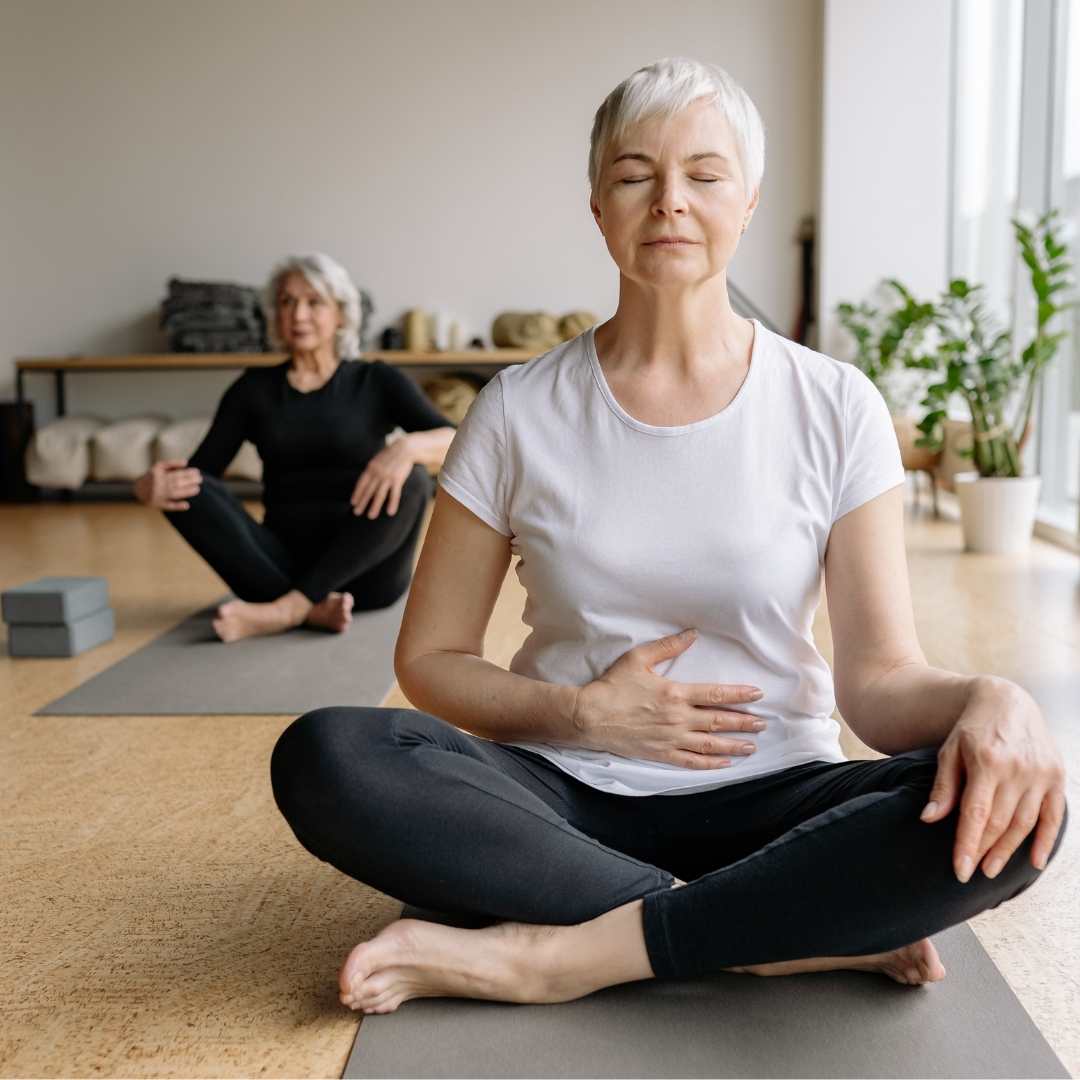
Vivian Goldschmidt, MA <![CDATA[Yoga For A Pain Free Life?]]> http://saveourbones.com/?p=11102 2012-04-19T16:22:48Z 2012-04-18T01:51:16Z 1 In the United States alone, around 116 million people suffer from chronic pain.2 That’s one third of the …]]> It has reached epidemic proportions. More than 1.5 billion people worldwide live with chronic pain, and with few exceptions, Mainstream Medicine offers no solutions other than dangerous and often addictive prescription drugs.1 In the United States alone, around 116 million people suffer from chronic pain.2 That’s one third of the total U.S. population!

So I was not surprised about the large number of emails I received from Save Our Bones community members asking for drug-free solutions to their chronic pain. I immediately realized that I had to search for something that anyone could do – regardless of age and physical condition – that was effective and backed by science and that it should work for both chronic and occasional pain. Believe me, I was up to the challenge!

Fortunately, I found what I was looking for. I simply had to travel thousands of years back in time to find the ideal natural method to get rid of pain.

I’m referring to yoga. In the Save Our Bones Program I recommend yoga to tackle stress. I also write that,

“From a bone health standpoint, practicing yoga increases physical strength and flexibility, both of which are helpful to prevent fractures.”

But as you’re about to discover, this ancient Hindu discipline can do more.

Yoga Instantly Relieves Pain

Specific yoga moves and poses can effectively help to instantly relieve pain. In my quest, I searched – and found – many studies that clearly show that yoga aids in reducing and eliminating chronic pain, thereby improving the quality of life of pain sufferers. You’ll read more about the studies later.

Also, practicing the right yoga moves and postures has been shown to give a more youthful and attractive appearance.

Notice how I wrote “the right yoga moves and postures.” This is crucial, because there are hundreds of yoga poses. Some can hurt more than help, so you have to be careful and avoid those. I know it from my own experience, because through the years I’ve taken many yoga classes mainly for relaxation and to improve flexibility.

I recently thought how great it would be to have a compilation of all the moves and poses that target the body areas that most commonly hurt, such as the back, the neck, shoulders, knees, hip joints, and arms.

One day, not long ago, my team was contacted by the makers of a DVD titled…

Yoga For a Pain Free Life

The timing couldn’t be better! They sent me their DVD to review, and I immediately watched it and found that Yoga For a Pain Free Life contained the moves and poses that I was looking for to share with the community, all explained and demonstrated by a true professional.

What’s more, you can do many of them just about anywhere – comfortably sitting on a couch or on your bed.

But watching wasn’t enough – I wanted to dive in and try the moves myself. So I did just that, and since that day, I’ve been practicing a few of the poses and moves almost every day.

I never told you this, but because of the long hours I spend using my computer I sometimes get a neck ache. In Yoga For a Pain Free Life there’s one easy move that I can even do while at my desk, and it immediately relieves my neck pain and discomfort. That’s just one example.

If you suffer from any occasional or chronic pain, I recommend you try Yoga For a Pain Free Life. With the 30 day no-questions-asked money back guarantee, all you have to lose is your annoying pain.

Click here to learn more about it →

To your pain free life!

References

1 Global Industry Analysts, Inc. Report, January 10, 2011. 
http://www.prweb.com/pdfdownload/8052240.pdf.
2 Institute of Medicine Report from the Committee on Advancing Pain Research, Care, and Education: Relieving Pain in America, A Blueprint for Transforming Prevention, Care, Education and Research. The National Academies Press, 2011.

]]>
28
Vivian Goldschmidt, MA <![CDATA[ALERT: Bisphosphonates Almost Double the Risk of Vision Loss]]> http://saveourbones.com/?p=11019 2012-04-10T04:41:49Z 2012-04-09T19:02:09Z Pick up any container of laundry detergent, and you’re likely to find this warning printed on it:

“If swallowed, rinse mouth, drink a large glassful of water or milk, and contact a physician.”

Yet millions of unsuspecting osteoporosis patients are prescribed bisphosphonates by their physicians – drugs that contain the same ingredients ...]]>

Pick up any container of laundry detergent, and you’re likely to find this warning printed on it:

“If swallowed, rinse mouth, drink a large glassful of water or milk, and contact a physician.”

Yet millions of unsuspecting osteoporosis patients are prescribed bisphosphonates by their physicians – drugs that contain the same ingredients as laundry products. Does that make any sense?

So it should come to no surprise that these drugs, which include Fosamax, Actonel, Boniva , Atelvia, and others, along with their generic counterparts, carry a long list of nasty side effects that I’ve painstakingly listed and explained in the Save Our Bones Program.

I’ve also written blog posts detailing information on the bisphosphonates and their respective side-effects alerts, including esophageal cancer and diabetes. If you haven’t yet, I urge you to read these:

Bad News are No News

As time goes by, more and more studies are simply confirming what I’ve been saying all along: that humans are being used as guinea pigs. And just a couple of days ago, yet one more large study has proven just that.

Published online in the Journal of the Canadian Medical Association, research results have shown that first-time bisphosphonate users had a 45% increased risk of scleritis and uveitis, both serious inflammatory eye conditions that cause blurred vision, sensitivity to light and pain.1 If not effectively controlled, these conditions can lead to vision loss.

If you have the Save Our Bones Program, you’ve read that “eye problems, vision loss, and blurred vision” are listed among the many the many side effects of bisphosphonates.

Inflammatory Bisphosphonates Can Damage Eyes

The researchers themselves write that:

“The release of inflammatory mediators is believed to be the possible mechanism for bisphosphonate-induced inflammatory events…The surge in the concentration of inflammatory mediators, especially among new users of bisphosphonates, may put some users at a higher risk of scleritis or uveitis.” 1

Basically, the researchers admit that bisphosphonates are highly inflammatory chemicals that can wreak havoc in your body. No kidding! Go figure how doctors can reconcile prescribing inflammatory osteoporosis drugs when they’d rush to prescribe anti-inflammatory drugs if the inflammation is caused by a “disease”.

Side-Effects Treated with Bone Loss Accelerator!

And guess how uveitis and scleritis are treated after the drug is stopped? By prescribing corticosteroids. These anti-inflammatory drugs not only have their own long list of side effects, they also accelerate bone loss! Again I must ask, how does that make sense?

In the Save Our Bones Program I write the following, as part of my conclusion in the chapter about bisphosphonates:

“It is quite obvious that the osteoporosis “cure” is a lot worse than the “disease”. We must be aware that more often than not, side-effects of medicines are treated with yet more medicines that have their own side-effects.”

What a terrible vicious cycle! Now the question is, when will mainstream medicine realize this? How many more human guinea pigs will it take for these drugs to be finally thrown into the dustbins of Modern Medicine?

Much-Ado About Nothing

Here’s the perfect example of good research gone to waste. After years of comparing data obtained from almost one million study subjects, the researchers’ conclusion is nothing but a “warning”.

Quoting the text from the actual study:

“The risk of inflammatory ocular adverse events, including scleritis and uveitis, is not highlighted in most package inserts included with oral bisphosphonates. Our study highlights the need for clinicians to inform their patients about the signs and symptoms of scleritis and uveitis, so that prompt treatment may be sought and further complications averted. Patients taking oral bisphosphonates must be familiar with the signs and symptoms of these conditions, so that they can seek immediate assessment by an ophthalmologist.” 1

In other words, the researchers’ best advice is to continue taking the drugs and to simply be aware of the possibility of having serious eye problems that will have to be treated by an ophthalmologist.

The establishment might consider this a valuable precaution. I – and I’m sure you too – consider this warning as ridiculous as the drugs themselves.

Till next time,

References

1 Mahyar Etminan PharmD MSc., et al. “Inflammatory ocular adverse events with the use of oral bisphosphonates: a retrospective cohort study.” http://www.cmaj.ca/content/early/2012/04/02/cmaj.111752.full.pdf+html. April 2, 2012.

]]>
57