


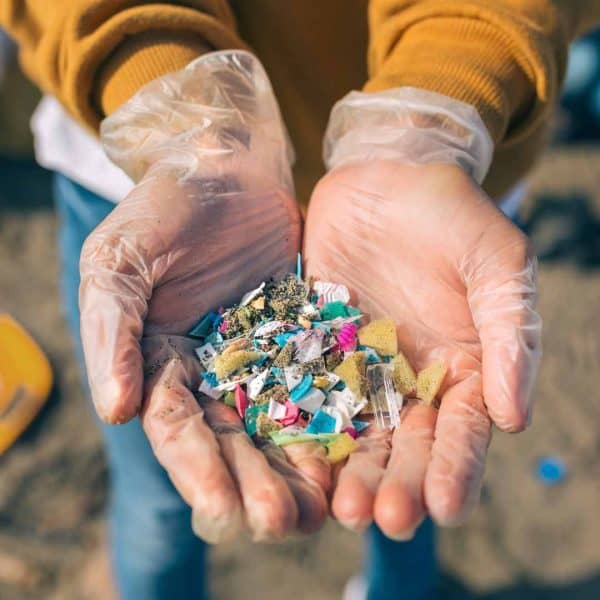
Studies have identified a new threat to bone health and longevity: microplastics.
Research into the health impacts of plastic has slowly but surely revealed how deeply microplastics have penetrated our bodies. Now we have evidence that these tiny bits of petroleum-based compounds are accumulating in our bones.
In this article, we’ll review recent studies that discovered microplastics in bone tissues. We’ll look at the data on how microplastics impact the health and function of our bones. Then you’ll get practical strategies for reducing your exposure to microplastics.
Microplastic In Our Bones
In recent years, scientists have detected microplastics in human blood, organs, the brain, placenta, and other bodily tissues, raising serious concerns about health impacts. But a study published in February 2025 is the first to characterize the presence of microplastics in three human skeletal tissues: bone, cartilage, and intervertebral discs.
Microplastics are minuscule particles of plastic, less than five millimeters in size, and often microscopic. Researchers observed 40 microplastic fragments across 24 samples taken from bone, cartilage, and intervertebral discs.
The participants were patients undergoing total knee arthroplasty or disc herniation surgery who volunteered their tissue samples for research. The group included one man and 15 women, ranging in age from 38 to 83.
The most frequently identified polymers were polypropylene (35 %), ethylene vinyl acetate copolymer (30 %), and polystyrene (20 %). The concentration of these microplastics averaged 22.9 particles per gram in bone and 26.4 particles per gram in cartilage. Intervertebral discs had even more, at an average of 61.1 particles per gram.
The researchers found evidence that these microplastics invaded the bone, cartilage, and intervertebral discs of participants through the bloodstream after only four weeks of exposure.
A second study, published in September 2024, identified microplastics in bone marrow. The scientists examined 16 bone marrow samples and found plastic particles in all of them. The particles they discovered spanned 25 different types of microplastics.
Synopsis
Unlock NASA’s Discovery for Stronger Bones
NASA uncovered a powerful connection between your organs and bone health. Now you can use that same discovery in the Osteoporosis Fresh Start Cleanse — a simple 7-day reset that flushes out toxins, boosts your body’s energy, and accelerates natural bone building.

Scientists have discovered that microplastics are invading our bones, cartilage, intervertebral discs, and even our bone marrow. The particles accumulate after as little as four weeks of exposure and are deposited via the bloodstream.
The Impact Of Microplastics
The presence of microplastics in human bone tissue is a recent discovery, so researchers have not yet gathered long-term empirical evidence about their health impacts. However, there has been research conducted in animal studies and in laboratory settings that sheds light on how microplastics affect the form and function of bone tissues.
In vitro studies on bone tissue cells have shown that microplastics impair cell viability, accelerate cellular aging, and interfere with healthy cell formation. They influence the expression of cytokines, signaling proteins that help regulate immunofunction and bone formation.
Microplastics have been observed to induce cell death, alter gene expression, increase oxidative damage, trigger inflammatory responses, and stimulate osteoclast production. Osteoclasts are the cells responsible for removing old and damaged bone. An overabundance of osteoclasts results in bone loss and osteoporosis.
Ultimately, microplastic accumulation has been shown to impair new bone growth and degrade bone microarchitecture, which increases fracture risk.
Furthermore, these cellular-level disruptions can have systemic effects across the body, causing serious health concerns over time. As more studies are conducted observing the effects of microplastics on human health, we will have a clearer picture of the harm these particles cause.
Synopsis
In animal studies, microplastics have been shown to have broad negative impacts on bone cells– threatening viability, accelerating aging, interfering with formation, increasing osteoclast levels, and more. While human studies are still needed, current knowledge suggests that microplastics are reducing the quality and strength of bones.
How To Reduce Your Microplastic Exposure
These discoveries make it clear that Savers should do everything possible to reduce their exposure to microplastics. In this day and age, that’s no small feat, but we’ve got five actions you can take to reduce the amount of plastic particles that make their way into your body.
- Avoid food and beverages in plastic containers. Toxic chemicals leach into our food from the plastic materials in which they are shipped and stored. As plastic naturally degrades, particles rub off onto your food and hitch a ride into your digestive system. At home, stop using plastic packaging such as plastic wrap, sealable baggies, plastic food storage containers, and plastic cups or drinking bottles. Avoid buying food or beverages packaged in plastic– opt for glass or aluminum for drinks and paper packaging for foods.
- Synthetic fabrics are plastic, and they release microscopic particles into the air and water, which ultimately end up in our bodies. Instead, buy clothing made of natural fibers such as linen, hemp, wool, cotton, and silk. Avoid polyester,
acrylic, rayon, nylon, spandex (elastane), and polyurethane. - Never heat food in a plastic container. Microwaving in plastic containers can release toxic chemicals and microplastics. Instead, use a glass, ceramic, or porcelain container.
- Avoid plastic furniture, shower curtains, decorations, and other furnishings. They all release microplastics into your home environment. Replace these toxic items and avoid purchasing products made with plastics. Upholstery made with synthetic fabric is also plastic, so before you buy that new sofa, make sure the upholstery is made of a natural fabric.
- Keep your home clean. Microplastics accumulate in dust, which recirculates through the air. Vacuum and dust your home regularly to round up microplastics before you breathe, eat, and drink them.
Synopsis
Reduce your exposure to microplastics using the five tips described above: avoid plastic food packaging and storage containers, don’t wear synthetic fabrics, never heat food in plastic containers, replace plastic furniture and furnishings, and regularly clean your home.
What This Means To You
The modern world is full of plastic, and it’s producing more by the minute. Do what you can to reduce your exposure, because microplastics harm your bones and contribute to osteoporosis and fracture risk.
Give your body a break from the toxic chemicals and a chance to reset using the Save Institute’s Osteoporosis Fresh Start Cleanse. It works by reducing your body’s toxic load, balancing your internal environment, and boosting your body’s natural bone-rebuilding processes. Unlike harsh cleanses that leave you hungry and tired, the Osteoporosis Fresh Start Cleanse focuses on nourishing your body while gently removing toxins that interfere with bone health. When the body gets relief from an acidifying diet and typical toxic exposures, it can rebalance and reset. In just seven days, with clear instructions, prepared shopping lists, and more than 40 recipes at your fingertips, this might be the easiest (and healthiest!) week you’ve had all year.
We may never be able to eliminate our exposure to plastics and toxic chemicals, but that doesn’t mean we can’t take action to reduce their impact on our bones and health.
7 Days to Jumpstart Bone Health
Your body already knows how to build strong, healthy bones — it just needs the right conditions. The Osteoporosis Fresh Start Cleanse clears away toxins, supports your kidneys and liver, and sets the stage for bone renewal.

References
1 https://www.sciencedirect.com/science/article/pii/S0160412025000674
2 https://www.sciencedirect.com/science/article/abs/pii/S0304389424018454
3 https://link.springer.com/article/10.1007/s00198-025-07580-4</small







Vivian, have you looked into the contribution of nanoparticles to this problem? Nanoparticles are 1-100 nanometers in diameter and they have the ability to penetrate biopermeable barriers. Their use has exploded in the recent decades and now they are used in electronics, automotive engineering, construction, medicine, pharmaceuticals, environmental protection and food industry. I don’t think they will be using plastic nanoparticles in food but in the other industries and environmental exposure to nanoparticles, like in construction materials. These can penetrate skin and get into tissues and blood stream
Mercedita, based on a study published in the journal Nanomaterials in 2022, there are three principal exposure pathways by which nanoplastics can enter the body: first, through oral intake, where particles present in contaminated drinking water, food (including seafood, table salt, and beverages like tea prepared in plastic-lined bags) are consumed and introduce nanoplastics into the gastrointestinal tract.
A second way is via inhalation, as airborne nanoplastic particles, originating from environmental sources such as tire wear, urban dust, and indoor air, are breathed into the lungs.
And third, through dermal exposure, where very small nanoplastics can penetrate the skin’s barrier during close contact with contaminated water or products containing nanoscale plastics. Once inside the body, these particles have the potential to cross physiological barriers and distribute systemically.
Two of the worst offenders, plastic gloves and face masks, imposed on society everywhere during the so called pandemic, and you still see them quite frequently, laying around near the sidewalks and other places.
Unfortunately, that’s true.
Thanks, Vivian! I’m not surprised that plastics are bad for our bones. They’re bad for everything in our health.
You’re welcome, Sharon!
FL is really bad about selling spring water in glass at the grocery stores and never in 5-gallon or even 1/2 gallon jugs even at the good organic stores. At most you get is 32 ounces, which would be gone in a day. Same with raw dairy so we have to go to a different store to get my raw cream for my coffee,
Unfortunately, that’s true, and for that reason, it makes sense to install a reverse osmosis system or to use a distiller. Of course, make sure that the distiller’s jug is made of glass and not plastic.