


If you’ve been diagnosed with osteoporosis or osteopenia, it is more than likely that your doctor prescribed an osteoporosis drug such as Fosamax followed by the proverbial calcium recommendation.
That’s exactly what happened to me after I was diagnosed with osteoporosis. My doctor also advised me to “drink plenty of milk”. Luckily, I did not follow his flawed advice and instead, I embarked on my own quest to conquer osteoporosis which culminated in the Osteoporosis Reversal Program.
Today, I want to share with you yet another piece of valuable information about a little-known bone health gem. It is vitamin K, best known for its blood clotting functions. In fact, vitamin K gets its name from the first letter of the German word “koagulation.”
If you are taking anticoagulant drugs, your doctor will most probably let you know that vitamin K counteracts the intended effects of your prescription and that you need to discuss with him or her your vitamin K intake. Otherwise, vitamin K is widely ignored by mainstream medicine, even though it is essential to your bone-building capacity.
Vitamin K helps your bones
Vitamin K is related to osteocalcin, also called bone Gla protein, which is a calcium-binding protein synthesized by osteoblasts or bone-building cells. It also works synergistically with vitamin D to regulate the production of osteoclasts, cells that remove old bone so that new bone can be deposited in its place.
In Chapter 3 of the Osteoporosis Reversal Program I write that bones are made up of 65% mineralized collagen and 35% collagen matrix made of minerals and other nutrients. The most prevalent mineral in bones is calcium. The calcium-binding capacity of osteocalcin is activated when it is chemically altered through a vitamin K-dependent process known as carboxylation.
Bone health benefits of Vitamin K stun researchers
Many scientific studies confirm Vitamin K’s positive effects on bone-building processes. One good example is an article published in the European Journal of Pharmacology by Akiyama and team. The researchers actually identified a process where a form of vitamin K2, a menaquinone known as MK-4, inhibits the formation of osteoclasts (Effect of vitamin K2 [menatetrenone] on osteoclast-like cell formation in mouse bone marrow cultures. 1994).
Interestingly, bisphosphonate drugs attempt to perform a similar function, but fail miserably at matching the well-coordinated performance of vitamin K. Because bisphosphonate drugs damage and distort osteoclasts, while vitamin K helps coordinate the right amount of osteoclast production with other bone cells so as to achieve the appropriate balance.
You see, bisphosphonates are synthetic drugs deprived of a biological role in bone metabolism unlike vitamins and other natural elements. How sad that this crucial distinction is ignored by mainstream medicine!
Another study on vitamin K and fracture prevention had such unexpected positive results that even its lead author, Dr. Angela Cheung, touted it “surprising”. (Vitamin K Supplementation in Postmenopausal Women with Osteopenia [ECKO Trial]: A Randomized Controlled Trial. 2008). Published in the journal PLoS Medicine, the study involved 440 postmenopausal women diagnosed with osteopenia.
Half of the participants were given a vitamin K1 supplement and the other half took a placebo for two years, with 261 continuing for two more years. While bone density scans showed equal bone loss in both groups, over the four year study period more than double the women who took the placebo suffered fractures compared to the group that took the vitamin K. But unfortunately…
Mainstream medicine is curiously skeptical of vitamin K’s bone health benefits
Typical of the complete disregard for natural health solutions in mainstream medicine and despite her excellent study results, Dr. Cheung is skeptical. She writes that it is “premature” to recommend vitamin K to osteoporosis patients. And Dr. Roberto Pacifici, director of the division of endocrinology at Emory University in Atlanta, commented on the same study in a WebMD interview that he was unimpressed with the results and that “people should not go out and buy vitamin K because of this study.” But why not? Especially since…
A myriad of other scientific studies also support the use of vitamin K for bone health
It seems that most doctors have conveniently forgotten about the Nurses’ Health Study that followed 72,327 registered nurses for ten years. This is one of the largest research projects showing that nurses with the lowest vitamin K intake had a 30% higher risk of hip fracture than those with the highest vitamin K intake (Feskanich D. et al. “Vitamin K intake and hip fractures in women: a prospective study”. American Journal of Clinical Nutrition. 1999). The median vitamin K consumption for this study was 169 micrograms per day, all derived from foods sources rather than from supplements. Diane Feskanich writes that this “…suggests the need for a higher vitamin K requirement than the current recommended dietary allowance…”
Just because doctors turn their back on such an excellent bone health vitamin, it doesn’t mean that you should too. So am giving you the…
Best sources of Vitamin K
All varieties of vitamin K are fat-soluble and belong to a chemical category called naphthoquinones, but there are two basic types of vitamin K. Phylloquinones, or vitamin K1 which is made by plants and menaquinones or vitamin K2 synthesized by intestinal bacteria.
Unlike vitamin K1, vitamin K2 does not concentrate in the liver. The body stores only limited amounts of vitamin K in the liver, so it is important to have enough bio-available K2 in the body.
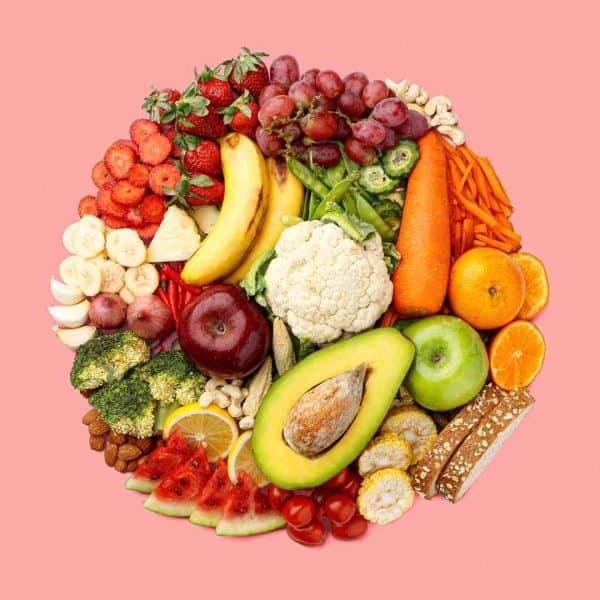
 The richest dietary sources of K1 are green leafy vegetables, such as spinach, Brussels sprouts, green beans, asparagus, and broccoli. Green peas, romaine lettuce, and bell peppers are some of the less concentrated but still very good sources of this vitamin. Even spices such as fresh parsley, oregano, thyme, basil, black and cayenne pepper are rich in vitamin K1.
Even though it is fat-soluble, there is no documented toxicity with high doses of vitamin K, with the exception of synthetic K3 or menadione, which I do not recommend.
The Adequate Intake (AI) for vitamin K for adult women is 90 micrograms and 120 micrograms for men. To give you an idea of what a low level this is, one cup of boiled spinach has 889 micrograms of vitamin K1.
If you are following the Osteoporosis Reversal Program it is really easy for you to get enough vitamin K1. However, for maximum bone-building benefits I recommend you add a K2 supplement to your dietary intake.
The best natural source of vitamin K2 is derived from fermenting a unique form of soy known in Japan as natto. If you are on anticoagulant medication, it doesn’t necessarily mean that you won’t be able to supplement vitamin K, but you should consult with your doctor.
Are you already taking a vitamin K supplement? Will you start now? Share your thoughts with us by leaving a comment below.





I take Vitamin K 100 mcg prescribed by my herbalist.
Hi Vivian, Thanks for info on K2. Recently had colicystitis, so feel nervous about taking calcium in case I make gall stones. Would K2 do instead? Monica Phillips Please reply
Hi Monica,
K2 is not a replacement for calcium; it helps bind calcium. Your solution is to follow the Osteoporosis Reversal Program and take low doses of organic calcium.You should consult with your doctor about this as well.
I would like to know if there is a Kosher form of organic calcium.
I would also like to know if there is any other method of receiving a reply from you.
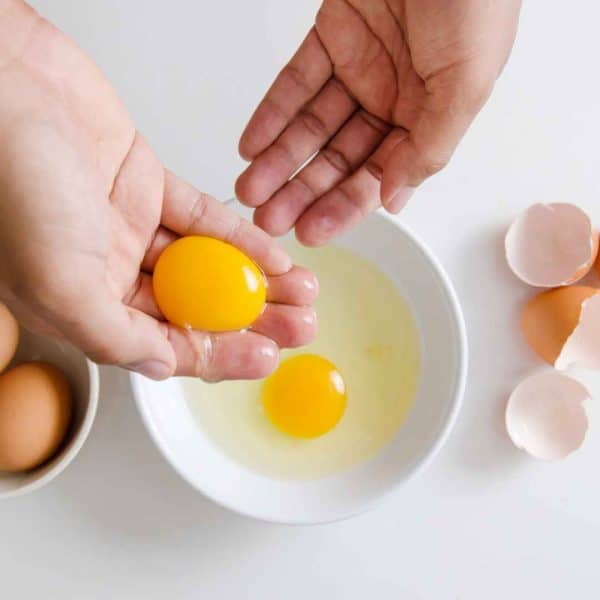
Thank you for the vit. K information. To answer your question, I would not take a vit. K supplement as I presently believe that it would be too easy to overdue. I will try to consume more greens and I have added an occasional soft boiled egg to my diet. Eggs from range fed hens result in a bright orange yolk rich in vit. K2. Also, the tender dandelion greens found in the center of the plant are a rich source of vit. K2 as well. Unfortunately, I found the dandelion greens very bitter, but will try again by mixing them in a lettuce salad…and maybe a good salad dressing would help, too.
Thank, again,
Andrea
Thanks so much for sharing that. Eggs are such a simple source of vitamin K2.
There is only 0.1 mcg of K in one poached whole egg, right?
I have hypothroid condition for which I take levoxyl. I understand that soy products should not be used with this condition. As the K vitamin you recommend is derived from soy how will this work with my hypothyroid problem? Is it safe for me to use? My doctor pushes the Actonel, Boniva type medicines which I have tried and don’t like the side effects, and I take nothing like that now. I would appreciate your comments.
For reliable info on health issues like low thyroid, menopause, osteoporosis, adrenal fatigue…… try this web site.
womentowomen.com
Of course, add www. in front of womentowomen.com
Aline,
Hypothyroidism is a true epidemic right now. Synthroid is the second most prescribed drug in North America.
The major culprit may be water fluoridation. In the mid 1900’s, fluoride was used as a drug to slow down a hyperactive thyroid (exactly the opposite of what you have). It was stopped due to the terrible side effects it caused.
Don’t worry about the minuscule amounts of soy in the K2 but do worry about the fluoride in your water (if you live in a community that fluoridates and in your toothpaste and mouthwash).
Hello: Vitamin K2 can increase fibrinogen levels. What can I do to prevent this if I take Vitamin K2 for bone health? Thank you, Fran
Fran,
Fibrinogen levels do go up, but within normal physilogical ranges and with no adverse effects observed (Effect of continuous combined therapy with vitamin K2 and vitamin D3 on bone mineral density and coagulofibrinolysis function in postmenopausal women
Maturitas, Volume 41, Issue 3, Pages 211-221
T.Ushiroyama).
Thanks again for the update.
Hi Vivian,
I already eat spinach daily so I guess I am getting my share, plus other greens. Thanks for the interesting article.
I was diagnosed with pagets desease and given actonel tablets one a day for two months.I developed a very bad jaw condition which on the the internet said it was due to actonel and iriversable, is there anything i can do to relieve this pain, my doctor dos`nt want to know.Hope you can help.
Hi Vivian, This past September, my doctor was strongly urging me to take an annual infusion of Reclast. I had been following the recommendations in Bone Revolution for the past year and not taking any Fosamax or Actonel as I had over the past 15 years. I agreed to take the Reclast, but only if we did another bone scan to see how I was doing. To his amazement and total shock, I had increased my density by 10% following your recommendations. He wanted to know what I was doing to have this much improvement. I now have osteopenia in my spine and no small fractures and the density in my hips has improved. My diet is basically vegan which is primarily alkaline except in the evening when I eat a piece of fish or chicken. I am thrilled and love my new “diet”. I also take 3,000 milligrams of D3 per day along with calcium, magnesium & multiple vitamins. Thanks for the tip on vitamin K. I will research that further. Please give me your thoughts on Strontium. A close friend is taking it and claims it has increased her density. Thanks, Vivian!
Thank you very much for this latest important information. I am going today to get a Vit K2 supplement. Should we be taking strontium?
Thanks
Jackie
Fantastic, Carol! Keep up the great results and dedication to the Program.
What was your answer to her question on taking strontium?
Hello Vivian 🙂
Thank you for your article today, it is very interesting. Luckily I love all my fresh green veggies, so I guess I am getting enough of the vitamin “K” that you refer to. Thank you again, have a nice day.
Best wishes from Bonnie Scotland
Marysia 🙂
I have been taking a capsule containing Vitamins D3 and K2 for some time now. I take it at the same time as my calcium capsule. I also eat a lot of fresh green vegetables, so I hope this combination will contribute to my bone health.
prunes have all the necessary ingredients for bone growth. That is good enough for me along with the food I eat.
I was eating 8 prunes a day after reading about a study (printed in Readers Digest)that showed good results for growing bone. But then I was dismayed to see that prunes are in the acidifying column in Vivian’s book.So now I eat 4 apricots to each prune, in keeping with the 80/20 ratio.
P.S. I’m not consuming more than a couple of prunes daily now, because that would be a lot of dried fruit. Should I be concerned about the acidity of prunes when they are supposedly so beneficial to my bones?
I would be more concerned with the teeth. The acid and the sugars (more concentrated) from the dried fruits will take a toll on one’s teeth. In general, people who have issues with bones have weak teeth. I am not talking about tooth decay but the mineral status of the teeth. You know bones, teeth, skin require the same nutrients to be healthy. One more concern with teeth is the direct damage by acidity of food.
I take a warfarin dose of 7.5 milligram a day.
The doctors do not want me to take any foods
with vit K in it such as spinach etc. What am
I suposed to do?
Max
Max,
Here’s what happens. If you consume more vitamin K, it may counteract the anticoagulant effect of warfarin. So technically, your doctor would have to increase your warfarin dosage. Considering that warfarin is rat poison, that does not sound like a good idea, and your doctor knows it.
IMPORTANT INFORMATION:
Anyone taking warfarin might want to look into Vitamin E as a possible replacement. Tocopherols (Vitamin E) are not only antioxidants; they also have very potent blood thinning properties. You might want to discuss this possibility with your doctor.
I’m quoting here from the Linus Pauling Institute (https://lpi.oregonstate.edu/infocenter/vitamins/vitaminE/):
“Use of vitamin E supplements may increase the risk of bleeding in individuals taking anticoagulant drugs, such as warfarin (Coumadin); antiplatelet drugs, such as clopidogrel (Plavix) and dipyridamole (Persantine); and non-steroidal anti-inflammatory drugs (NSAIDs), including aspirin, ibuprofen, and others. Also, individuals on anticoagulant therapy (blood thinners) or individuals who are vitamin K deficient should not take alpha-tocopherol supplements without close medical supervision because of the increased risk of hemorrhage.”
Below is a link to a good and very detailed article about blood thinners and natural solutions:
https://www.drlam.com/opinion/blood_thinners_and_nutritional_supplement.asp
It is highly unlikely that your doctor will replace warfarin with vitamin E, because Vitamin E is not a patentable prescription drug so ultimately, the decision will be up to you.
Taking vitamin E supplement is not a simple thing.
“The E complex is an eight-member family, composed of eight closely related vitamin E molecules (or “vitamers”): four tocopherols and four tocotrienols. Each member of the vitamin E complex has its own unique strengths, and even unique properties not shared with other E vitamers. If your “vitamin E” contains only alpha-tocopherol – or alpha tocopherol with token quantities of “mixed tocopherols” – you’re missing out on
the benefits of the “other” vitamin E molecules. But more than that: studies show that unbalanced alpha-tocopherol supplementation actually depletes the body of the other members of the family, and can negate many of their benefits!
After just one month of supplementing with 400 IU of alpha-tocopherol, peoples’ gamma-tocopherol levels are reduced by two-thirds. It may take as much as two years for the ratio of alpha- and gamma-tocopherol to normalize after unbalanced alpha-tocopherol supplementation is stopped!”
http://www.AOR.ca
About Dr. Lam’s article I will read it with a grain of salt. One N.D. pointed out an error.
Hello Vivian,
I hope Maybe you can tell me why , when I take anytype of K, I get Leg Cramps?
I can eat foods with K’s but not take the K, or K2 vitamins!!
All my blood tests show, everything is good..
I do have Osteoporosis, and I’m 67yrs..
I just bought a vitamix machine, so I can liquifiey my Veggies, and get everything good out of them.
Thank you , and Please reley.
April
Are you sure the k is related to the leg cramps, or are you doing enough stretches with your exercising if you are exercising, and if not then you should begin. Some times when people mix all these veggies in this machine or any mixing machine they will get stomach pains but it is not the machines fault, as you just can not mix a with b you have to follow the book. just a few comments. Same as taking the K
Hi there, you cramps are more likely caused by lack of magnesium or even calcium!
Vitamix are great I have one, be sure to mix alot of green leafys especially Kale.
I am Raw vegan I make Kale cisps alot have equivalent to half a bag a day! plus watercress etc. Plus you would be able to make yummy Almond milk too, bee sure to soak your almonds first! I have osteoperosis I’m only 32, . Make infusions of herbs Horsetail, nettle, oatstaw, lemongrass for bone buliding tea! Juice green veggies every day too!
Blessings! Ju
I agree. Probably Mg and Potassium deficiency.
VitaMix according to one Natural Hygenist/Chiropractor is a good machine.
One has to be sure about having enough zinc, L-Carnitine, etc. when one doesn’t eat meat.
I’m on aspirin and I’ve my doubts as expressed by others in their comments about combining vit.K and aspirin
Mualidharan, K
Asprin is NOT consitered a real Blood thiner..There is not connection between taking Aspirn, and K.
Btw, most adults in the Usa are taking 1,2 coated baby aspirin aday.
Check out my answer to Max.
While it is scientific to recommend vit.K, what about the 50+ people who are on aspirin and other blood thinning drugs?
Muralidahran, K
Vitamin K is not for everyone especially those on blood thinning medication.
Always do your own research and don’t just listen to others.
Yep; and research why you are taking blood thinners first!
Hi Vivian,
How about that your recommendations on vitamin K – good things to eat by the way (no pepper for me) is the same as the diet that I am currently on for gallbladder disease.
Have found that combining the above recommended foods with a 1/2 lemon in a glass of water (not tap or iced water) first thing in the morning appears to have a positive effect throughout the day. Note: have lost a bit of weight as well.
Have been juggling between the 2 types of food and drinks until now. What a relief.
Hi Vivian,
Thanks for the further information. It’s good to know that Vit. K is another helper in the bone density struggle. I have just checked out the bone strength formula and multivitamin formulas that I take, and no Vit K in either of them. However as I eat a lot of the greens you mentioned, hopefully I’ll get enought from them.
I’m doing my best at following the 80/20 ratio, but with temperatures in the 30s here in Queensland I do need to drink water.
Keep up the good work, we need you!
Have a great day, week, year!
Nancy
Thanks for Vita.K info. but will look for it. I am on BP medication and will be on Diabetes med. also hence too many tablets to swallow!! What can we do!! At old age ( after crossing 60) a person had to depend on all tablets and vitamins.. That’s life…
I have an 11 year old daughter that has been diagnosed with Osteopenia. She takes 1000 mg of calcium and 3000 IU of Vitamin D a day.
She has other health isues that is chalenge to balance. Do you have any sugestions? Is there a brand of calcium and vit D that you recomend.
Thanks Cindy
I live in England I take Kordells Bone formula, which is good easier to absorb by the body, it has all the nutrients need to make strong bones!
I would advise against taking anything with CALCIUM CARBONATE IN IT! need to balance it with magnesium! too much calcuim taken alone can cause CALCIFICATION! that can occur anywhere in the body, later in life. Make sure she eats plently of greens, make dressings made with Tahini, lemon, agave, nutrional yeast, little garlic, sesame oil, too disguise the taste. Alkaline diet is the best!
What other healthissues does she have?
Blessings
Cindy,
Watch out for the calcium supplement (it should be organic or amino acid chelated). I hope you and your daughter are following the Osteoporosis Reversal Program…
Thank you very much Vivian for the information.
I was diagnosed with osteoporosis and osteopena 3 years ago. I started taking actonel for more than a year. My M.D. daughter gave me the once a month dosage until I stopped it cause I noticed my bones became very stiff. I cannot bend and can’t pick up things dropped on the floor. I stopped taking Actonel and I continued my daily exercises at our YMCA, ate lots of veggies and fruits and drink purified water. I also take Calcium caltrate with Vit. D, K, Magnesium and Zinc. I take Fish Oil 3 times a day. I also take Multivitamins(one a day Women’s) which also have Vit. d, k, magnesium,zinc and other vitamins. Please let me know if the supplements I’m taking are good for my Cholesterol, blood pressure and my bones. I was diagnosed with symptoms of athritis in my groins. Inspite of the pains, I continued my daily exercises, swimming, biking, walking, aerobics and weight lifting.
Your book helped me. Thank you.
Great! You’re on the right track, Erlinda.
Is this a supplement I should be taking as I am estrogen sensitive and have had a lumpectomy?
Vitamin K has no known connection to estrogen, Shirley.
No need to worry about K supplement and estrogen.
BUT, eating natto beans for K2 may be a different story. The soy from the beans may have a negative impact on estrogen????
Comments welcome.
vivian, my wife was diag w/osteoporosis and i went behind her back and orderded your books and have been gradually giving her suppliments you have recomended along with these i have been giving her coQ10. at her last doctor visit he stated her magnesium level was remarkedly improved. I will start giving her a K suppliment also. I love her dearly and she will not beleive a doctors meds could hurt her in any way. god bless
Dan,
You are a very special husband! Please tell your wife that I recommend she should keep you 🙂
Vivian, I just read your article on Vitamin K2 for Osteoporosis and Osteopenia, of which I am aware. What I would like to know is this: if one is taking blood thinning supplements like fish oils and tumeric, does Vitamin K2 interact with these supplements the same as it supposedly does with blood-thinning drugs? Is is safe to take both kinds of supplements? I’d appreciate an answer. Thank you.
Helen,
Check out my answer to Max.
EVERYONE: don’t forget to use the Search option at the very top of the Save Our Bones page.
Ireally appreciate all your information and
the comments. Thankful that someone is brave
enough to buck the traditional approach!
Blessings your way !
I was taking Vit. K2 years ago, then stopped because it was just one more pill to swallow. I’m sorry I stopped. Because for the past couple months, I’ve been taking a 50 mcg. gel cap daily and I can feel the difference. (The amount used in the research that was effective was 45 mcg. Perhaps this is mentioned in one of the links.)
I don’t feel the need to take vitamin K.I think that I get enough K from my diet. I was prescribed etidrocal but I have chosen NOT to take it.I am trying to incorporate an 80/20 alkaline/acidic diet as much as possible and I supplement with calcium(1600 mg.)a day,mostly
from supplements and soy beverage.I also take 3500 iu’s of Vitamin D as well as a product called Bone Basics which I get supplied from my local health food store.Since I have taken Actonel and Aclasta, I have decided to discontinue bisphosphonates altogether.The reason for discontinuing bisphosphonates altogether is due to my loss of ” THREE teeth” during the 3 year time frame of being on them.The gums became infected around each tooth and it was advised to have the affected teeth extracted. They have been extracted but, I am NO LONGER taking bisphosphonates.I am very happy about MY DECISION.Thank you for your book ‘The bone health revolution’.
Smart!
Hi Vivian, just received your latest email regarding vitamin K. My question is this:I had breast cancer,diagnosed in 1992 and the most likely cause was HRT. I had been on that for quite a few years after my hysterectomy. I have been told never to take anything with soy in it. Should I take Vt. K2?
Thanks for your reply.
Ria
Vivian, you do a grand job of keeping us informed. Ubiquinol is interesting but I wonder if I”m overdoing the supplements? For osteoarthritis I take Collagen and Fish Oil. For Osteoporosis I take everything!Bone Support formula, extra calcium and magnesium, Vitamin B complex, Vitamin K, selenium and zinc. Also Vit D3 as we get more rain than sun in bonny Scotland. Would Ubiquinol be overload? My diet is very bone friendly but I dont trust the nutritive quality of food now. Pearl
Pearl,
You’re doing the right thing… keep it up (and take ubiquinol).
I have been a bit concerned, because I have K2 in a calcium supplement that I have been taking, and I am also on aspirin therapy. I am just not sure how much aspirin would counteract the effects of K2. A year ago I was told I had osteoporosis and needed actonel right away. I took one pill with many side effects. I have been using your natural approach this year and my bone density has shown a very slight increase. I have been given one more year before the doctor plans to recommend a scipt again. I am doing all I can to bring it up naturally, and plan to continue. I had open heart surgery 3 years ago, so the aspirin therapy is necessary.
Vitamin K2 is not for everyone especially those on blood thinning medication or Aspirin.
There are many bone health supplements without vitamin K. Wonder why you don’t switch to those.
I have not been taking Vitamin K, but will purchase it tomorrow and take it daily. Thank you so much for your input. Jerry Laufer
Thank you so much for sharing the Vit. K information. It will be added to my list of vitamins I take daily.
I am taking MK-7, one a day. And I hope it works! How does one prove that it works?
I’m glad to have this chat available. Thanks.
Thanks for the info. I eat fresh green organic vegetables every day. I know vitamins are absorbed better when they are in the food one eats. The multivitamin I take has K in it.
Multivitamins have vitamin K1 in them, rarely have K2. K1 is for blood clotting, K2 is to make the calcium in the body behave itself. Japanese doctors prescribe K2 to their patients for osteoporosis.
I would just like to say to please research any drug your doctor prescribes to you for osteo. Every one that I have researched so far except for Forteo actually stops your natural process of building new bone. Then they make your brittle bones harder which naturally weighs a little bit more so they show up as more dense and we think something good is happening but it is not. Forteo does not destroy the natural process of building bone but the side effect is bone cancer. Who wants that!!! I honestly believe we are what we eat.
I would also add – do your own research on any vitamin/mineral recommended to you by any healthcare professional. The supplements are not much different from drugs although less side effects. One has to know one’s condition before deciding what to take and how much. Food, preferably organic, should always be first choice. Please don’t buy cheap supplements which are usually poor quality.
Amen!
I say we are what we digest and absorb and not just what we eat.
Yes, I did take actonel the monthly dosage for 2 months and started researching. The more I read about the symptoms and side affects from taking a drug prescribed medication and having side affects while taking it I decided to go the natural route. I have been taking a raw calcim type natural capsules which have 1,600 iu and vit. k2 100mcg along with magnesium vit. c and vit. D. I love your site and thank you for all the information especially the diet info to help.
Thanks for the info about vit. K. Since following your advise, I have really researched healing my osteo with food. I have found that sodium, chlorine and iron are necessary for our bodies to build our bones back with the ‘clast and ‘blast process you describe. Sodium can be gotten from spinach – hence the vitamin k – strawberries and carrots. Chlorine can be obtained from cabbage and sauerkraut. I have not found the best source for iron, yet. I think raisins might be it. I also just discovered that gelatin, like Jello, is 48% calcium.
I stay away from raisins for the rest of my life. You can eat raisins if you already have dentures. Talk to a dentist or do proper research before you eat raisins regularly.
Vivian-Thank you for your constant effort to help us eat the right diet and take the correct supplements to prevent further bone loss. I am exercising with the National Osteoporosis Foundation CD, walking an hour and a half, taking the recommended supplements and TRYING to eat a diet you recommend daily. IS THERE A BLOOD TEST THAT WILL SHOW THE PH LEVEL IN MY BODY TO SEE IF I AM IN BALANCE? Please respond. Pat Miller
If you ask me, I’ll do saliva or urine test for pH.
https://www.indigo.com/Test-Strips/pH-test-strips.html
Hi Vivian,
Thank you for passing along this great information. I currently enjoy all these V-K enriched foods and will add Vitamin K supplements to my daily routine.
As always, your support and steady stream of updates is so appreciated.
Happy New Year!
Thank you so much!
Celestina Marie
Thanks for information about vitamin K. will definitely increse my green veg intake. I do take extra vitamin D and caltrate daily. However I’m always hesitant to take all vitamins.
I do as a matter of fact eat spinach regularly. it is a staple in our house. Nice to know it is something good for bone health. Thanks for all the good info.
Spinach provides vitamin K1, but not K2. K2 comes from egg yolks, butter, cheese such as brie. A pretty small amount of K1 can be converted into K2 by the body, but not much. Better to eat the cheese, egg yolks and butter.
Thanks, V. Sounds like a good plan.
Lee
I was doing all the ‘right’ things and taking all the right supplements which kept my osteoporosis stable without taking meds.
Now I have been diagnosed with Multiple Myeloma and am recovering from multiple compression fractures in my vertebrae. As part of my treatment my oncologist has me on Zometa once a month. That is supposed to strengthen my bones and hopefully to prevent further compression fractures.
I find this interesting, but readers may also want to look at this article –
https://lpi.oregonstate.edu/infocenter/vitamins/vitaminK/
I believe it would be worth discussing with your doctor before starting to take vit K
I am taking OsteoK supplement, which is big doses of K2 as MK4. What I need to know, is, does it matter if you are taking it as MK4 or MK7? I’m confused. also taking calcium, D, magnesium and strontium.
I asked my Dr. about Vit. K as therapy, and she snapped “Not FDA Approved”. I felt like saying, “So????????” Wish I would have!
Thanks!
https://www.aor.ca/assets/public/promotional/Vitamin%20K%20Explanation_Advances.pdf
You do know that strontium must be taken a couple of hours away from calcium?! 5 mg of strontium maybe okay with calcium but not more.
How about you skip the strontium altogether? It does not belong in bones and because strontium is denser than calcium, it distorts the DEXA results.
I have refused to take Strontium Citrate all this time.
I am thinking of skipping DEXA too. Not sure the radiologist knows how to decipher the results.
Deb,
I wonder if you were able to keep a straight face?? Your story is one of the funniest I heard lately, but very sad at the same time…
Thank you for each and every little tip that you send! Is there any conflict with taking calcium, magnesium, and K2 along with Osteo-Biflex that I take for my stiff joints?
Debbie, in my research I have found that stiff joints are a deficiency of sodium and celery is the best souce for it for your joints. It neutralizes acids and is a good blood cleanser. Sodium is the one element that most people lack.
Can you point me to the research please?
Sodium???
Yes, vit. D, Zn, Mg deficiency
I take Progena’s OsteoPlus, which has only 0.05 mg of Phytonadione (synthetic K1, according to Wikipedia). However, I eat broccoli, green beans, and/or red leaf lettuce daily.
Am already taking vitamin k2
Your articles are very informative.My doctor wanted me to take Actonel, but I refused.I want to use multivitamins and diet instead. I checked the Shaklee multivitamin that I am taking and was pleased to note that it contains 80 mcg of Vitamin K.
The Shaklee has 100 mcg of phytonadione which is vitamin K1. Vitamin K2 is either menaquinone (mk7) or menatetrenone (mk4).
I will definitely increase my intake of greens as you advise, I will ask my doctor about taking a Vitamin K tablet daily.