


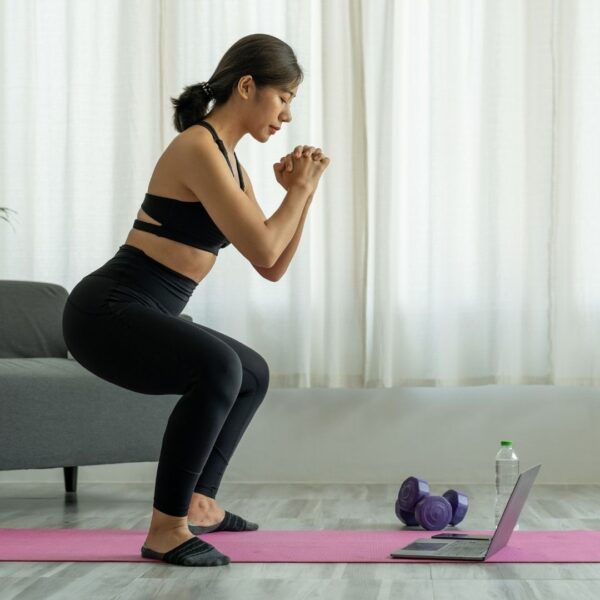
In the past several years, multiple studies have investigated the efficacy of a growing exercise trend: the weekend warrior exercise pattern. People who fit the “weekend warrior” designation do all of their exercise in just one or two days per week.
In this article, we’ll analyze a series of studies that compare the health outcomes of weekend warriors to study participants who spread their exercise over more days or were insufficiently active. You’ll learn about the impact of this exercise pattern on overall health, bone health, and osteoporosis risk.
Weekend Warriors Avoid Negative Health Outcomes
A 2025 meta-analysis published in the journal Public Health found that across 18 studies, weekend warrior and regular physical activity patterns were associated with similar health outcomes when compared to inactivity.
The studies these researchers analyzed found that participants whose physical activity was condensed into one or two days per week had lower risk for metabolic syndrome, hypertension, obesity, type 2 diabetes, and depression compared to inactivity; the same benefits associated with a comparable amount of exercise spread out over the course of the week.1
A 2024 study published in the journal Circulation tested associations between physical activity patterns and the incidence of 678 conditions among 89,573 participants in the UK Biobank prospective cohort. Those participants wore an accelerometer for one week between June 2013 and December 2015.
The study found that weekend warriors were at lower risk of 264 future diseases compared to inactive participants. There was no significant difference in risk reduction between participants with regular activity patterns and those with weekend warrior patterns.2
Synopsis
Studies have found that the weekend warrior exercise pattern is associated with health benefits comparable to those of regular exercise patterns. You can do the same amount of exercise in two days or spread it across the week and achieve similar benefits.
Weekend Warriors Show Reduced Mortality Risk
A 2022 study published in the journal JAMA Internal Medicine analyzed the bottom line of weekend warriors’ health outcomes: mortality risk.
The study was a nationwide prospective cohort study that included 350,978 adults who self-reported physical activity to the US National Health Interview Survey from 1997 to 2013. The researchers did not find any significant difference in mortality rates between weekend warriors and participants with regular exercise patterns. 3
Ready to Put This Into Action?
Reading about bone health is a great first step, but building stronger bones requires the right type of exercise.
SaveTrainer gives you safe, expert-led workouts designed specifically for osteoporosis and osteopenia, so you can improve strength, balance, and confidence while following a structured plan.
Compared with physically inactive participants, the active participants of both exercise patterns had lower all-cause and cause-specific mortality.3
This outcome aligns with studies showing that weekend warriors experienced the same health benefits as active individuals who spread out their weekly exercise.
Synopsis
Studies show that weekend warriors get the same reduction in mortality risk as people with regular exercise patterns, when compared with inactive people. This means exercise (no matter the pattern) reduces your risk of health problems and increases your lifespan.
Weekend Warriors And Bone Health
A 2026 study published in the Journal of Bone Mineral Research analyzed accelerometer and metabolomic data from 14,069 participants in the UK Biobank study with an average follow-up period of 7.8 years.
The researchers examined associations of physical activity patterns and metabolomic profiles with osteoporosis and fracture risk. Metabolomic profiles measured small-molecule metabolites— such as sugars, lipids, amino acids, and vitamins– in participants’ bloodstream, providing a snapshot of their biochemical health. 4
The researchers also compared this data to each participant’s genetic risk of osteoporosis and fracture. This comparison allowed them to determine whether the benefits of a particular health pattern were constrained by participants’ genetics.
Compared to the inactive participants, the weekend warriors had a significantly reduced risk of osteoporosis. Furthermore, this risk reduction was not significantly modified by genetic susceptibility to osteoporosis, suggesting that the benefits of exercise can outweigh genetic predisposition.4
A 2025 study published in the journal Osteoporosis International conducted a cross-sectional analysis of data from 16,937 adult participants in the NHANES database to examine the relationship between physical activity patterns and femoral neck bone mineral density (BMD).
Participants’ physical activity patterns were self-reported through questionnaires and categorized into four groups: inactive, insufficiently active, weekend warrior, and regularly active.
The study found that both the weekend warrior and the regular activity groups showed significantly higher femoral neck BMD compared to the inactive group. There was no statistically significant difference in BMD between the weekend warrior and regular activity groups.5
This is encouraging news for Savers. Exercise remains a powerful tool for maintaining overall health and building stronger bones to help prevent osteoporosis and fractures, whether you complete your weekly exercise in one or two sessions or spread throughout the week.
Synopsis
Studies have found that weekend warrior exercise patterns and regular activity patterns provide the same bone health benefits, including reduced risk of osteoporosis and higher BMD compared to inactivity. Genetic predisposition to osteoporosis had no impact on the ability of exercise to reduce the risk of osteoporosis.
How Bones Respond To Exercise
The living tissue of bone responds to mechanical load by adding additional bone mass and increasing density and strength. Mechanical load is placed on bone through weight-bearing exercise.
Cells within bone called osteocytes are mechanosensory; they respond to the mechanical force of loading by releasing chemical signals that trigger the production and activation of bone-building osteoblasts. These studies clearly demonstrate this mechanism.
The optimal amount of weekly exercise remains a subject of ongoing investigation. The World Health Organization’s 2020 guidelines recommend 150–300 minutes of moderate-intensity aerobic physical activity per week, 75–150 minutes of vigorous-intensity activity, or an equivalent combination of both, along with muscle-strengthening activities at least twice a week.
For older adults, the guidelines also recommend balance and functional-strength exercises to help prevent falls and protect bone health. This was presented as the optimal baseline for longevity, although more exercise may be required for specific health improvements.
The timing of your weekly exercises does not appear to significantly impact its benefits.
The intensity and cumulative duration of exercise each week do matter. If your exercise does not reach moderate intensity (noticeably raising your heart rate and making you breathe harder), then a greater duration of exercise may be needed to achieve similar benefits.
Synopsis
Bones contain cells that sense the mechanical loading caused by exercise. They respond by releasing chemical signals that trigger the production and activation of bone-building osteoblasts. The timing of the exercise you do each week does not impact the effectiveness of this process, but the intensity and cumulative duration of exercise do.
What This Means To You
Whether you exercise for a short session every day or in one super long session per week, you’re building your bone strength to prevent or reverse osteoporosis and reduce your risk of fracture.
We created SaveTrainer to make it easy for you to get the weekly exercise your bones need, no matter the limitations of your schedule. SaveTrainer is a digital workout video platform that brings world-class exercise classes to you– anytime and anyplace. SaveTrainer offers real trainer-led workout classes in a wide variety of styles tailored to every ability level. No matter how or when you want to exercise, SaveTrainer has the workouts you need to get started right now.
Take one concrete step toward your health goals and try SaveTrainer today. Tomorrow, take the next one by adding another workout to your day and you’re on your way to stronger bones and a healthy, independent future.
Don’t Just Read About Bone-Building Exercise… Start Doing It.
Follow safe, guided workouts designed specifically for osteoporosis and osteopenia. Build strength, improve balance, and move with confidence using expert-led workout plans you can do from home.

References
1 https://www.sciencedirect.com/science/article/abs/pii/S0033350625004238
2 https://www.ahajournals.org/doi/10.1161/CIRCULATIONAHA.124.068669
3 https://jamanetwork.com/journals/jamainternalmedicine/fullarticle/2794038






I have been following the Dencersise programme 3 x a week for the past 18 months. It takes me about 45 minutes by the time I have done the warm up, 3 exercises and cool down. I can feel my body is a lot stronger and when I started I couldn’t do many of the exercises, but I can now. I also walk about 4 – 6 miles per week, at a fast pace to and from work with some hills and I’m on my feet most of the time at work moving around, but is this enough per week to impact my bone density? I have quite significant osteoporosis.
Very interesting! Thanks Vivian
You’re welcome, Linda!
Thanks Vivian!
My pleasure, Kathy!
I have been following the Dencersise programme 3 x a week for the past 18 months. It takes me about 45 minutes by the time I have done the warm up, 3 exercises and cool down. I can feel my body is a lot stronger and when I started I couldn’t do many of the exercises, but I can now. I also walk about 4 – 6 miles per week, at a fast pace to and from work with some hills and I’m on my feet most of the time at work moving around, but is this enough per week to impact my bone density? I have quite significant osteoporosis.
Thanks for this article Vivian! I recently started working full time again and can;t find time to go to the gym during the week. So I exercise on weekends and thought maybe that was not enough. Now I feel much better about that.
That’s great, Amanda! And you’re very welcome!