


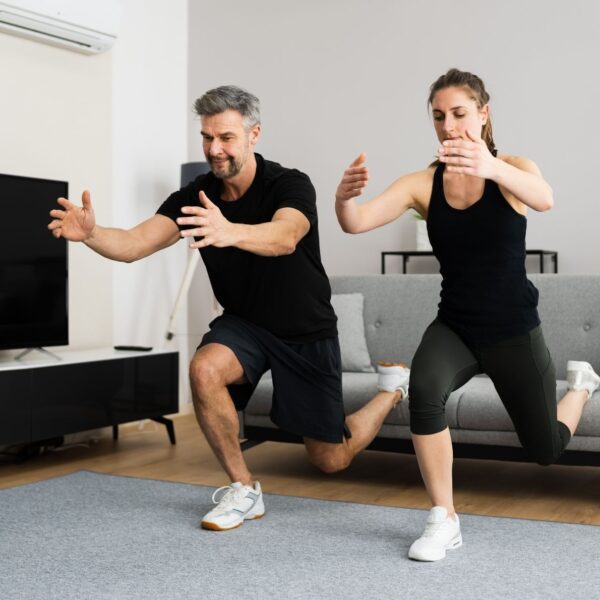
Regular exercise is one of the most effective natural ways to protect and build bone, according to two recently published studies. These findings reaffirm the Save Institute’s long-standing guidance for preventing and reversing osteoporosis.
In this article, we’ll analyze the latest evidence showing that exercise increases bone mineral density and favorably influences bone metabolism by increasing bone formation markers. You’ll learn about mechanical loading and why different types of exercise can help strengthen bone.
Systematic Review Of Exercise And Bone Turnover
A systematic review and meta-analysis published in the journal Frontiers of Physiology in January 2026 analyzed 22 randomized controlled trials involving 1,051 participants. The authors found that exercise significantly improved femoral neck and whole-body BMD of women across age groups.
The review also included studies that measured bone formation markers, in addition to BMD, finding that exercise effectively increased the bone formation markers osteocalcin (OC) and bone-specific alkaline phosphatase (BALP) in adults.
These results reaffirm the power of exercise to improve bone health and strength. A closer look at the specific interventions in these studies can provide us with valuable examples of exercise modalities that positively impact bone.
The exercise interventions across these 22 studies primarily consisted of high-impact exercises, resistance training, combined exercise programs, and whole-body vibration training. The types of exercise included jumping, ball games such as soccer or handball, circuit training, resistance exercises using equipment, and vibration platform training.
The duration of sessions varied widely, ranging from a few minutes to more than an hour. The frequency of exercise sessions was generally between two and four times per week, over the course of interventions that lasted between two months and two years.
Synopsis
A review of 22 randomized controlled trials found that exercise significantly improved BMD at multiple sites and was associated with increased bone formation markers. These studies included a wide variety of exercises, including ball games, resistance exercise, and vibration platform training.
Study Shows Physical Activity Builds Bone In Postmenopausal Women
A study published in Frontiers in Physiology in September 2025 summarizes recent advances in the research on exercise interventions for the prevention and treatment of osteoporosis in older women.
Ready to Put This Into Action?
Reading about bone health is a great first step, but building stronger bones requires the right type of exercise.
SaveTrainer gives you safe, expert-led workouts designed specifically for osteoporosis and osteopenia, so you can improve strength, balance, and confidence while following a structured plan.

The study’s authors emphasized that the high efficacy of exercise is related to multiple pathways by which exercise supports healthy bone turnover and robust bone formation.
Bone is a mechanosensitive tissue that senses and responds to mechanical loads generated by muscle contractions– such as those produced during resistance training or walking– as well as gravitational forces. In older adult women, mechanical loading modulated bone metabolism through three major pathways: Piezo1, IGF-1, and Wnt/β-catenin signaling.
- Piezo1 is the pathway that perceives mechanical load directly. In response to mechanical stimuli, Piezo1 enhances osteoblast activity and the synthesis of new bone matrix.
- IGF-1 is the abbreviation for Insulin-like Growth Factor 1. Resistance training stimulates the release of local IGF-1, which regulates the balance of bone-forming osteoblasts and bone-resorbing osteoclasts to inhibit resorption and promote formation.
- Wnt/β is a cell signalling system that plays a role in cellular differentiation– the process that determines what type of cells stem cells will develop into. Mechanical loads from muscle contractions activate Wnt/β-catenin signaling, promoting osteoblast proliferation and differentiation.
These multiple pathways make exercise highly effective at improving bone health. The study authors concluded that exercise should be prescribed to older adult women to help prevent and treat osteoporosis, and that it should be individualized based on each patient’s physical condition, previous exercise experience, and personal preference.
Based on the evidence it analyzed, the study recommended a multimodal exercise program combining aerobic exercise, resistance training, and balance and flexibility training.
This study clearly demonstrates the complementary bone-building benefits of regular physical activity, especially when it includes a variety of exercise modalities.
Synopsis
A study published in Frontiers in Physiology outlined three major pathways by which mechanical load strengthens bone by modulating the bone remodeling process to favor bone formation. The study recommends individualized exercise prescriptions for older adult women that incorporate a variety of exercise modalities.
What This Means To You
Exercise is highly effective at building bone, and you’ll get the greatest benefit by incorporating a variety of physical activities into your weekly routine. If you only do one type of exercise, it’s time to mix things up. To maximize the benefits for bone remodeling and bone health, include a variety of exercise modalities in your weekly routine, such as walking, strength training, yoga, bodyweight exercises, and aerobic activities.
The Save Institute created SaveTrainer to make it easy to explore new forms of exercise. Our extensive library of expert-led workout videos is always growing and provides workouts at every ability level. The wide variety of exercise modalities available through SaveTrainer makes it easy to stay engaged, avoid boredom, and maximize the benefits of physical activity.
Your bones are alive. They respond to everything you do. Provide them with the right input, and you’ll get the stronger, healthier bones you need to live a full, active, independent life!
Don’t Just Read About Bone-Building Exercise… Start Doing It.
Follow safe, guided workouts designed specifically for osteoporosis and osteopenia. Build strength, improve balance, and move with confidence using expert-led workout plans you can do from home.

References
1 https://www.frontiersin.org/journals/physiology/articles/10.3389/fphys.2025.1672997/full





After thinking I had to give up running or jumping and finding out that I do not, I started again. Running, weight training 6 times a week.
That’s wonderful, Vickie! Many people believe they need to avoid certain physical activities after an osteoporosis diagnosis, so I’m glad you learned that these activities can still be beneficial when they’re appropriate for you. It sounds like you’ve built a very active routine. Stay active and healthy!
Thank you!
You’re welcome, Sharon!
Thanks for the article Vivian. I was never doubting that exercise is good, so I workout at least twice a week, but its good to know why and how.
You’re very welcome! I’m so glad you found the explanation helpful. It’s encouraging to know why exercise benefits your bones, and it sounds like you’re already doing a great job by working out regularly. Keep up the excellent work!