


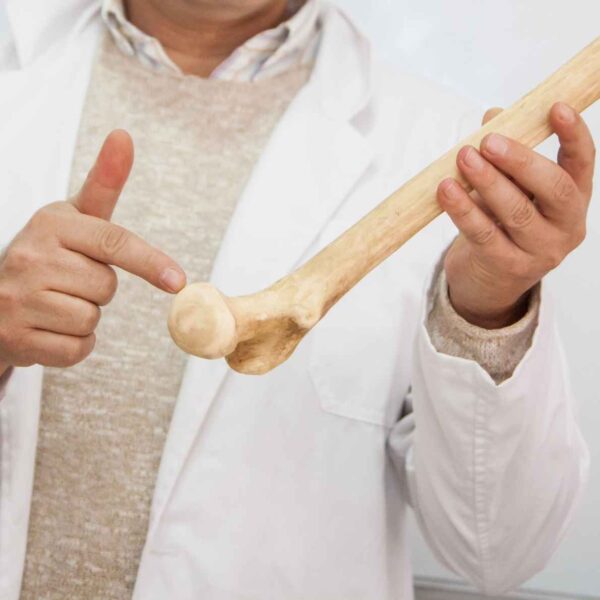
Exercise helps build and maintain strong bones. While those words accurately describe cause and effect, they skip over the extraordinarily complex processes that occur between the action of exercise and the result of stronger bones.
In this article, we’ll examine a scientific review that explores a surprising connection between exercise and bone formation: glucose metabolic reprogramming. You’ll learn about this important bone cell process and what you can do to optimize its ability to strengthen your bones.
Multiple Pathways Connect Exercise to Bone Formation
For more than a century, Wolff’s Law has described how bone adapts to the mechanical forces placed upon it. Simply put, bone adapts to the forces placed upon it, adding tissue in response to mechanical loading or losing mass during prolonged periods of disuse.
We now know that mechanosensitive cells, particularly osteocytes, detect mechanical stress and trigger signals that regulate the activity of bone-building osteoblasts. But studies have uncovered additional pathways that connect physical activity to bone formation.
A 2026 narrative review published in the journal Sports Medicine – Open examined how glucose metabolism reprogramming (GMR) influences bone cell function.
GMR is the process by which cells change how they use energy to meet their needs.
Drawing on 144 studies, the review examined how glucose metabolism influences the development and differentiation of bone cells and how exercise may regulate metabolic pathways involved in bone remodeling.1
Synopsis
Bones contain mechanosensitive cells that allow them to adapt to use by adding bone mass, but recent research has found another link between exercise and bone growth: glucose metabolism reprogramming (GMR). GMR is how cells change the way they consume energy. This study linked exercise to activation of bone-supportive metabolic pathways.
Metabolic Reprogramming and Osteoblast Formation
The review found that glucose metabolism reprogramming plays a significant role in the regulation of bone cell function. Changes in metabolic pathways can influence the proliferation, differentiation, and activity of bone marrow mesenchymal stem cells (BMSCs), and other bone cells including osteoblasts, osteocytes, and osteoclasts. 1
The authors placed particular emphasis on the relationship between GMR and bone marrow mesenchymal stem cells (BMSCs).
Ready to Put This Into Action?
Reading about bone health is a great first step, but building stronger bones requires the right type of exercise.
SaveTrainer gives you safe, expert-led workouts designed specifically for osteoporosis and osteopenia, so you can improve strength, balance, and confidence while following a structured plan.

The evidence suggests that metabolic reprogramming can influence whether BMSCs develop into bone-building osteoblasts or other cell types. 1 Bone marrow mesenchymal stem cells can differentiate into other cell types including bone marrow adipose (fat) tissue and bone-building osteoblasts. Increased bone marrow fat is often associated with lower bone mineral density and compromised bone health, whereas osteoblasts are responsible for forming new bone tissue. Supporting the differentiation of BMSCs into osteoblasts is one of the processes that contributes to healthy bone formation.
Studies have found that BMSC differentiation in both humans and mice is influenced by their energy pathways, but different pathways trigger the production of osteoblasts in mice than in humans. Although mouse models provide valuable insights into human biology, important metabolic differences between the species mean that findings in mice do not always translate directly to humans.1
Although the metabolic pathways associated with osteoblast development differed between species, the findings suggest that glucose metabolic reprogramming plays an important role in directing BMSC differentiation.
Most data about the impact of metabolic reprogramming comes from mouse studies or studies using cell cultures, so more research is needed to fully understand this process in humans.
Synopsis
The review linked glucose metabolic reprogramming to bone marrow mesenchymal stem cell differentiation. Changes in energy pathways influenced whether BMSCs became fat tissue or bone-building osteoblasts. The pathways linked to osteoblast formation were different in humans than in mice, and most data is from mouse studies. More research is needed with human participants.
Exercise Influences Glucose Metabolic Reprogramming
For stronger bones, we want our bone marrow stem cells to become osteoblasts. Research suggests that the metabolic pathways active within these stem cells can influence whether they develop into osteoblasts, and that glucose metabolic reprogramming plays a role in this process.
The final piece of the puzzle, assembled by the authors of the narrative review, is how to reprogram glucose metabolism within bone marrow stem cells to encourage them to become osteoblasts. The answer they found is exercise.
Exercise stimulates skeletal muscles to release signaling molecules, known as myokines, that can influence glucose metabolic reprogramming in bone cells. These signaling molecules regulate the metabolic pathway that bone cells use for bone metabolism.1
Laboratory studies on cell cultures of osteoblasts, osteocytes, and osteoclasts have shown that these cells also respond to shear force with changes to their energy production pathways. Increased shear force, which simulates the mechanical loading of exercise, was associated with changes that promote bone formation.1
Although this observation is promising, they come from laboratory experiments rather than human clinical trials, so further research is needed to confirm these findings.
Here we see chemical crosstalk between skeletal muscle and bone, stimulated by exercise. This additional layer of communication between muscles and bones may help the skeleton adapt to the physical demands of everyday activities.
Based on the evidence they reviewed, the authors suggested that combining different forms of exercise could support glucose metabolism reprogramming (GMR) in bone and could be part of the recommendations that medical providers give their patients. Their example, quoted below, should sound familiar to Savers, as it aligns with the exercise recommendations in the Osteoporosis Reversal Program.
“A prudent clinical approach would be to recommend a combination of weight-bearing aerobic exercise (e.g., brisk walking, 30–45 min, 3–5 times weekly) and resistance training (e.g., 2–3 times weekly) while avoiding high-impact activities that may increase fracture risk in patients with established osteoporosis.”1
Synopsis
The review found that exercise stimulates muscles to release signaling molecules that can optimize glucose metabolic reprogramming (GMR) and support bone formation. The authors suggest combining regular weight-bearing aerobic exercise with resistance training while taking precautions with high-impact activities that may pose fracture risks in people with osteoporosis.
What This Means To You
Regular exercise supports bone strength through several biological pathways, including mechanisms involving cellular energy metabolism that scientists are still working to understand. The causal relationship is clear, and the cellular mechanisms underlying it are proving to be powerful and complex.
The exercise recommendations made by these study authors should be familiar to Savers: weight-bearing aerobic exercise and bone-safe resistance training are hallmarks of the Save Institute’s approach to bone building. In fact, we created an entire digital workout video platform to make these exercise modalities available to Savers. SaveTrainer provides a personalized workout plan tailored to your fitness level, abilities, and bone health goals.
Led by expert trainers, SaveTrainer’s workouts are specifically designed for people with osteoporosis or osteopenia, emphasizing bone-safe movements that support strength, balance, and skeletal health.
Keep moving your body to build stronger, more resilient bones.
Don’t Just Read About Bone-Building Exercise… Start Doing It.
Follow safe, guided workouts designed specifically for osteoporosis and osteopenia. Build strength, improve balance, and move with confidence using expert-led workout plans you can do from home.

References
1 https://link.springer.com/article/10.1186/s40798-026-01121-x#Abs1






Thank you, Vivian!
You’re welcome, Lenny!