


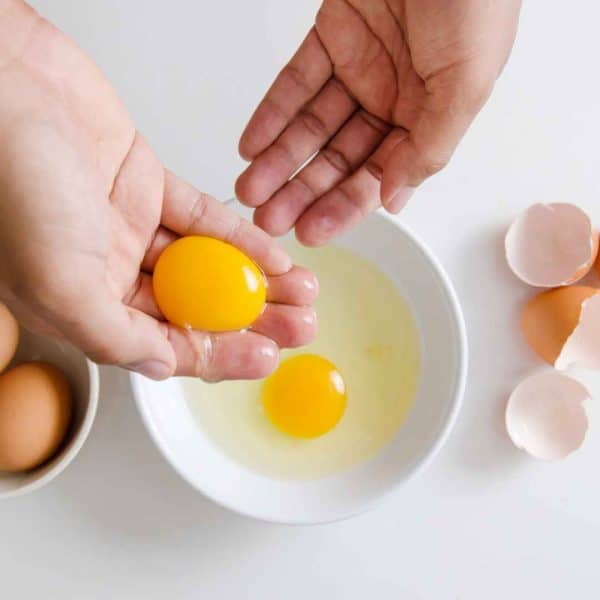
Egg yolk compounds may offer a natural way to treat osteoporosis without the side effects associated with conventional drug therapies, according to a growing body of research.
As more and more people learn about the potentially dangerous side effects of osteoporosis drugs, scientists are searching for food-based, natural, and safe osteoporosis protocols.
In this article, you’ll learn about a line of research into a compound found naturally in eggs, called phosvitin, and how it may help prevent and reverse osteoporosis.
The Compound Phosvitin
Phosvitin is a protein found in egg yolks, known as a phosphorylated protein. A phosphorylated molecule has had a phosphate group added to it. The phosvitin in egg yolk is the most phosphorylated protein in nature. Phosphorylated proteins have shown potential for improving bone health in animal studies, increasing interest in phosvitin as a potential therapeutic compound.
A 2020 study used laboratory cultures to test the impact of phosvitin and a phosvitin-derived compound on osteoblasts and osteoclasts, which are the cells responsible for depositing and resorbing bone, respectively.
The same group of researchers had previously developed methods to extract phosvitin from egg yolks and to create a phosvitin phospho-peptide using a mixture of digestive enzymes called pancreatin. Their new study evaluated the bone building potential of both phosvitin and the phospho-peptide version of the compound.
The researchers found that both compounds have the potential to improve bone health by promoting osteoblast differentiation and proliferation, suppressing osteoclast activity, and increasing the formation of new bone matrix.
While these findings are encouraging, the study notes that the therapeutic usage of phosvitin is limited by factors including its limited digestibility, which may hamper its absorption and limit its impact in the body.
Phosvitin derivatives, such as the phosvitin phospho-peptide developed for this study, aim to avoid these limitations while retaining the compound’s positive impact on bone remodeling.
Synopsis
Stronger Bones. Without Drugs. Guaranteed!

The natural and evidence-based program that helps reverse osteoporosis and osteopenia in 12, 6, even 3 months… guaranteed.

Phosvitin is the most phosphorylated protein in nature, making it a prime candidate for a food-derived compound to improve bone health. A 2020 study found that phosvitin and a phosvitin-derived compound both promoted osteoblast differentiation and proliferation, suppressed osteoclast activity, and increased the deposition of new bone matrix. Phosvitin has low bioavailability, but phosvitin-derived compounds may avoid this pitfall.
Further Research Uncovers Phosvitin’s Possibilities
Two studies published six years apart in the Journal of Functional Food reveal the potential of phosvitin-derived compounds for treating bone loss.
A 2019 study examined the impact of both phosvitin and a phosvitin hydrolysate. A hydrolysate is a compound that has been broken down through the addition of water. This process is called hydrolysis. When proteins are hydrolyzed, they become smaller, more easily digestible components.
This study examined the effects of phosvitin and its hydrolysate on osteoblast differentiation and inflammation in osteoblastic cells. It found that both compounds promoted osteoblast differentiation and collagen synthesis, phosvitin upregulated osteocalcin production, and phosvitin hydrolysate increased alkaline phosphatase. Both compounds had anti-inflammatory effects. All of these actions benefit bone health and quality.
A study published in 2025 reported on the effects of a novel phosvitin phosphopeptide, a molecular variation on phosvitin. The compound, abbreviated as EDDPSpS, is identified by the study as a potential food ingredient to intervene in osteoporosis.
The study used cell cultures to observe the effects of EDDPSpS on osteoblastic cells. The phosvitin-derived compound promoted the differentiation and mineralization of osteoblasts by up-regulating a cellular signaling pathway.
This positive impact on osteoblast number and activity of osteoblasts could make EDDpSpS an effective food ingredient or supplement for improving bone health and supporting osteoporosis interventions.
Synopsis
Studies in 2019 and 2025 found that phosvitin and molecular variations of the protein have the potential to intervene in osteoporosis. In studies of cell cultures, the compounds promoted the differentiation of bone-building osteoblast cells and bone mineralization.
Eggs, Phosvitin, And The Future of Osteoporosis Interventions
The development of phosvitin-derived supplements may make the benefits of this naturally occurring egg yolk compound a viable supplement for increasing bone strength.
However, none of the studies we examined were conducted in vivo– they didn’t observe the effects of these compounds in living organisms, human or animal. The cell culture studies conducted by these three groups of researchers provide clear evidence of a mechanism of action by which phosvitin and more bioavailable molecular variations positively impact bone remodeling cells.
It remains to be seen how these compounds will function in living organisms, but future studies will likely address this question
In the meantime, these findings about phosvitin lend additional credence to the Save Institute’s long-held position that eggs are a bone-healthy food. Eggs are full of bone-supporting nutrients. They are abundant in sulfur, which your body uses to create collagen, which helps form bone tissue and gives it fracture-preventing flexibility.
Eggs are an excellent source of protein, which helps to prevent sarcopenia, the muscle loss that increases the risk of falls and fractures. Eggs’ vision-protective antioxidants can also help reduce the risk of trips and falls. Eggs are also an excellent source of energy-boosting B-vitamins, calcium, and Vitamin D.
Eggs are listed in the Osteoporosis Reversal Program as an acidifying Foundation Food. When you add eggs to your meals, remember to balance them with alkalizing ingredients or side dishes to maintain an 80/20 pH-balance of alkalizing to acidifying foods.
Synopsis
Phosvitin and its derivatives have not been evaluated in animal or human studies, so it remains to be seen if they could become an effective bone-building supplement. However, these studies confirm the Save Institute’s long-held position that eggs are an excellent bone-building food when balanced in your diet with alkalizing foods.
What This Means To You
Include eggs as part of your bone-healthy diet for their wide range of bone-health benefits, balancing them with alkalizing ingredients. Keep abreast of the latest research into natural treatments for osteoporosis– researchers are actively seeking food-based, safe, and effective new osteoporosis protocols.
The Osteoporosis Reversal Program has been ahead of its time for many years. The program combines the latest research into nutrition and human health to build a multifaceted, holistic, and all-natural approach to preventing and reversing osteoporosis.
Through a combination of exercise, diet, supplementation, and lifestyle choices, the program can transform your daily life into an engine for building stronger bones and a brighter, more independent future.
References
2 https://www.sciencedirect.com/science/article/pii/S175646462500163X






Hi, I notice that vitamin K is mentioned often. However it needs to be said that people on blood thinners have yo be careful to take those veggies containing vit. K. People often go overboard with the amount they eat. Just saying!!!!!
Thank you for the interesting information! One of my concerns is D3. I have been told that my levels of D3 are high, verified by lab work. This article about eggs, has brought up my concern about D3 again! I have eliminated products that have added D3, such as Calcium+D3, and replaced with Calcium. Another concern is almonds. I have been told to eliminate almonds, including almond milk, due to the formation of oxalates. Being lactose intolerant, this has been difficult. I love almonds! I have switched to oat milk, which also contains D3.
I am open to any ideas, advice, and suggestions. Thank you.
i,ve read that you soak almonds it takes the oxalates out?
You’re raising very thoughtful concerns, and it’s good that you’re guided by your lab results. Having higher-than-optimal vitamin D levels doesn’t automatically mean harm, but it does mean supplementation should be personalized. Avoiding added D3 in fortified foods and supplements, as you’re doing, is a sensible step, and follow-up labs can help determine what your body actually needs.
Regarding almonds, oxalates are most problematic for people with kidney disease or a history of calcium oxalate kidney stones. For many others, moderate amounts are well tolerated—especially when almonds are soaked or eaten with mineral-rich foods. If almonds truly don’t agree with you, options like oat, hemp, or coconut milk can work well; just look for versions without added D3 if that remains a concern.
You can also make your own plant-based milk at home, which gives you full control over ingredients and avoids unwanted fortification.
I hope this helps!
Good to know! Thanks for the interesting information
My pleasure, Sharon!
After reading this I feel even better about eating 2 eggs every day. Thank you Vivian!
You’re welcome, Linda!
Also try as often as possible to buy eggs that haven’t been fed corn and soy. Corn and soy aren’t healthy ingredients and don’t need to be a part of the eggs. They are a bit smaller but still healthy and delicious, as well as being pastured and organic.
Thank you for sharing this! You’re right that eggs from pasture-raised hens with more natural diets tend to be higher quality. At the same time, eggs from hens not fed corn or soy can be difficult to find and aren’t always accessible or affordable for everyone. The key is choosing the best eggs available to you, such as organic or pasture-raised, and remembering that eggs are still a nourishing, bone-supportive food even when sourcing isn’t perfect.