


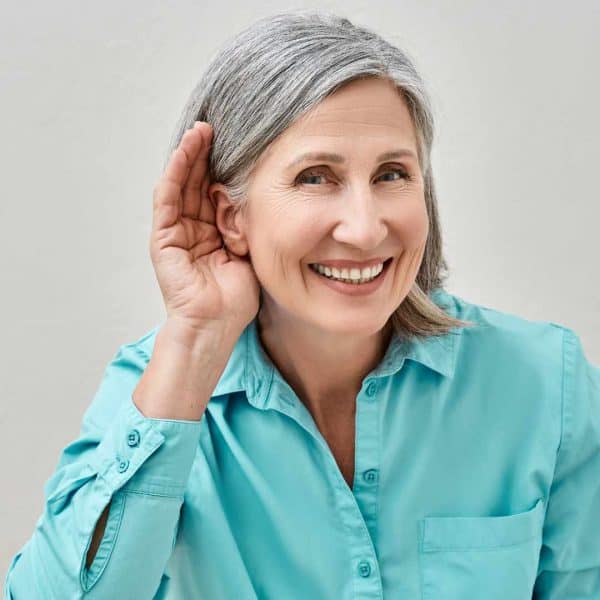
Studies have revealed a surprising connection between hearing loss and falls. This makes hearing health an important, and often overlooked, factor for preventing fractures. Let’s explore the science behind this surprising connection.
Fortunately, there’s another unexpected factor that can help protect your hearing.
Researchers have found a correlation between eating a healthy diet and avoiding age-related hearing loss. We’ll look at the details so that you can keep your ears sharp and your bones strong.
Older Adults With Hearing Loss Are At Increased Risk Of Falling
Studies have linked even mild hearing loss with an increased risk of falling. One study found that a 25 decibel drop tripled fall risk in adults aged 40 to 69.1
Scientists have suggested several possible causes of this association. One possible explanation lies in the physiology of the ear. Your inner ear plays a role in balance, so changes to the inner ear related to hearing loss could impact balance.
A reduced awareness of auditory and spatial surroundings could also play a role. Hearing plays a critical role in helping you perceive and interpret your environment. Potential trip hazards like an oncoming bicycle, children playing, or a pet could all become surprises that lead to a fall.
Scientists also point to the impact of hearing loss on cognitive load and shared attention. Hearing is a core sensory function that requires cognitive processing power. When hearing is diminished, the brain must spend more energy to try to parse the reduced auditory signals. The cognitive strain caused by hearing loss may interfere with other essential functions such as balance, gait, and physical coordination, raising the risk of falls.1
A study published in the journal Geroscience in April of 2025 analyzed data from 786 older Japanese adults. Researchersassessed both the participants’ hearing ability and gait speed. The participants were divided into groups based on each measurement and were monitored annually for eight years to track falls.
The study found that participants without age-related hearing loss but with a reduced gait faced a significantly increased risk of frequent falls. Participants with both hearing loss and slower gait speed faced significantly higher risks of single and frequent falls, as well as more minor and severe fall-related injuries, including fractures.2
This study found no significant association between age-related hearing loss alone and fall-related incidents. This suggests that hearing loss works synergistically with other age-related changes such as slower gait, to raise the risk of falling.2
Stronger Bones. Without Drugs. Guaranteed!

The natural and evidence-based program that helps reverse osteoporosis and osteopenia in 12, 6, even 3 months… guaranteed.
Synopsis
Age-related hearing loss has been linked to increases in falls and fractures. This may be due to physiological changes in the ear, additional cognitive load, and interaction with other age-related changes like reduced gait speed.
The Link Between What You Eat And How Well You Hear
A 2019 study published in the American Journal of Epidemiology found that eating a healthy diet reduced the risk of acquired hearing loss.3
Researchers at Brigham and Women’s Hospital analyzed more than 20 years of dietary intake information from 3,135 women, collected every four years beginning in 1991. They compared that dietary data to hearing test results collected over three years and found that women who consistently followed healthy eating patterns had a significantly lower risk of hearing loss.
The diets the researchers used as standards of healthy eating included the Dietary Approaches to Stop Hypertension (DASH) diet and the Alternate Mediterranean (AMED) diet. Both of these diets are remarkably similar to the nutritional guidelines in the Osteoporosis Reversal Program. Greater adherence to these diets has been associated with health benefits including lower risk of heart disease, hypertension, diabetes, stroke, and death.
Participants whose diets most closely resembled those healthy dietary patterns had a 30 percent lower chance of decline in mid-frequency hearing sensitivity. For higher frequencies, the risk reduction was 25 percent.3
This wasn’t the first study linking diet to hearing health. The researchers referenced earlier studies showing that greater intake of specific nutrients and foods correlated with a reduced risk of self-reported hearing loss. They included:
- Carotenoids beta-carotene and beta-cryptoxanthin – found in squash, Carrots, oranges, and other yellow to orange fruits and vegetables
- Folate – found in legumes, leafy greens, and other vegetables
- Long-chain omega-3 fatty acids – found in seafood, salmon, and other fish.
Synopsis
A study with 3,135 women found that participants with long-term healthy eating patterns faced a 25 to 30 percent lower risk of hearing loss than those who didn’t adhere to a healthy diet. The researchers used the DASH and Mediterranean diets as their standards for healthy eating patterns.
Eating, Hearing, Strengthening Bone, and Preventing Falls and Fractures
These findings highlight the intricate interdependence of our bodily systems and how they influence and support each other in unexpected ways.
The interconnectedness opens up multiple opportunities to enhance bone health and reduce fracture risk. Excitingly, many of these interventions have multiple positive impacts on bone health. The effects of eating a healthy diet, as illustrated in the above study, are a prime example.
Adopting the Save Institute’s 80/20 pH-balanced diet aligns you with the healthy eating patterns identified in the study. When you provide your body with pH-balanced meals, you prevent bone-damaging acidification. At the same time, you support hearing, which we now know helps prevent falls and fractures.
With a single action — eating healthy — you’re supporting both hearing and bone health. Of course, that’s only the tip of the iceberg– your diet has deep and far-reaching effects on every part of your health.
Synopsis
The body’s complex systems often lead to surprising and insightful health connections.This means you can gain multiple health benefits from a single action, such as following a healthy diet. The Save Institute’s 80/20 pH-balanced diet protects bones by preventing acidification, while at the same time it helps prevent falls and fractures by reducing the risk of hearing loss.
What This Means To You
Falls are the foremost cause of fractures, and maintaining your hearing helps to prevent falls.
Eat a nutritious, well-balanced diet to help prevent hearing loss while nourishing your bones and body to stay strong and active.
The Osteoporosis Reversal Program takes a holistic approach to preventing and reversing osteoporosis. By considering the many interconnected systems that impact your bones, the ORP provides many paths to a healthier, more active, and more independent future.
Stronger Bones. Without Drugs. Guaranteed!
The natural and evidence-based program that helps reverse osteoporosis and osteopenia in 12, 6, even 3 months… guaranteed.

References
2 https://pmc.ncbi.nlm.nih.gov/articles/PMC11979016/
3 https://academic.oup.com/aje/article/189/3/204/5586179?login=false




Thank you so much for these articles. I really appreciate it. But what about people who don’t want to eat animal products? How can they keep their bones strong?
I enjoyed reading this article. Valuable information.