October is National Pizza Month in the United States. When you think of healthy food, pizza might not be the first dish that comes to mind, but the choices you make in the kitchen can transform the nutritional value of your favorite comfort foods.
Pizza provides the perfect example of how your decision-making process can turn unhealthy habits into healthy behaviors. In this article, we’ll analyze scientific studies on how these strategies can improve nutrition and health, then you’ll get a bone-healthy, pH-balanced pizza recipe. It’s perfect for National Pizza Month, but we suspect you’ll want to make it year-round!
How Thinking Ahead Can Transform Your Behaviors
Pizza has a reputation as a last-minute meal — the guilty-pleasure salvation of a recipe gone wrong or an abandoned grocery run. Once we’re in that position, feeling overwhelmed and already hungry, it becomes easy to make the easiest, most comforting, and often least healthy choices.
In fact, studies have confirmed that stress can result in unhealthy food choices with detrimental health impacts. However, they have also found that thinking ahead can prepare you to make healthier choices.1
A study published in 2026 in the journal Psychoneuroendocrinology tested the ability of precommitment to improve dietary choices— even under stressful conditions.
The researchers define precommitment as a behavioral strategy that you can use to overcome the tension between immediate wants– a last-minute pizza delivery order– and longer-term goals, such as building stronger bones through a healthy diet.
The study included 29 participants who reported generally trying to eat a healthy diet. Researchers assigned them tasks in two stages: a precommitment stage in which they committed to make healthier food choices, and a choice stage, in which they chose what to eat.
The participants completed both stages twice– once under acute stress and once under stress-free conditions. Researchers found that participants’ propensity to choose unhealthier but tastier food increased with stress, but this effect was counteracted by making a precommitment to select healthier foods even when faced with stressful conditions.
In essence, precommitment worked to prevent stress from derailing the participants’ best intentions. The study was conducted with participants who self-identified as people who try to make healthy eating choices. A study with a less focused participant group found that lunch orders placed in advance of lunchtime contained on average 10% fewer calories than orders placed for immediate consumption.2
Stress and hunger result in less healthy dietary choices. Those two conditions often accompany the choice to eat pizza, but thinking and planning ahead can do more than prevent you from making a dietary choice you’ll regret– it can turn that same dish into one that supports your goals while satisfying your cravings.
Eat Your Way to Stronger Bones
Enjoy 200+ delicious, bone-strengthening recipes designed to naturally support bone health—without spending hours in the kitchen. Bone Appétit makes eating for stronger bones simple, satisfying, and stress-free.

Synopsis
Studies have found that people tend to make less healthy dietary choices in stressful situations. However, they also discovered that people who precommitted to making healthy food choices even under stressful circumstances were more likely to stick to their goals. Precommitting to your future food behaviors is a psychologically effective strategy you can employ to maintain a bone-healthy diet.
Transform Your Favorite Dishes, One Ingredient At A Time
Pizza is a dish famous for its versatility. After all, once you’ve decided you want a pizza, the real decision-making begins- what do you want on your pie?
The secret to transforming your favorite foods goes one step further back– it starts with the ingredients you typically take for granted.
When we eat, our digestive system breaks food down into components that support or inhibit bodily functions such as bone formation. When we construct recipes by considering those components, we can prioritize what our bodies need to build and maintain bone.
For our bone-building pizza, we start with the crust.
Instead of making a crust from acidifying, genetically modified wheat, we can choose an alkalizing ingredient: cauliflower. Suddenly, the base of our pizza has become a major source of bone-building vitamins and minerals!
Tomatoes are naturally sweet, delicious, and full of bone-building compounds. Where pizza sauce can go wrong is with the addition of bone-damaging sugar. Choosing a pizza sauce with no added sugar tips the scales in your favor without sacrificing authentic flavor.
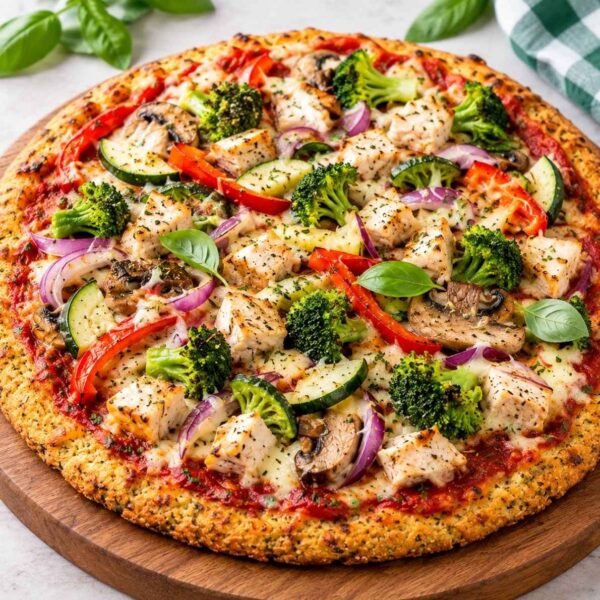
Finally, the choice that we’re most familiar with: toppings! Because we’ve made our crust from an alkalizing ingredient, we have space to include acidifying toppings that provide additional nutrients. For this pie, we’ll use shredded mozzarella cheese and cooked diced chicken breast, adding essential protein to our meal.
Mushrooms, bell peppers, onions, broccoli florets, and sliced zucchini add flavor, color, and a rainbow of additional bone-building nutrients.
- Bell peppers contain more Vitamin C than oranges. Vitamin C is essential for collagen synthesis, and collagen gives bones their flexibility.
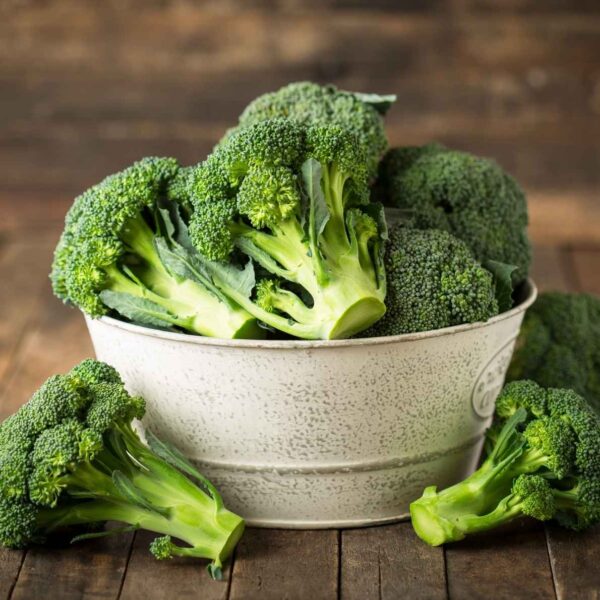
- Broccoli adds a second cruciferous veggie to the mix (after the cauliflower crust!), bringing the Foundation Supplement Vitamin K to our plate.
- Mushrooms are an excellent source of copper and zinc.
- Zucchini boasts manganese and Vitamin B6.
- Onions are a good source of the antioxidant quercetin, along with other bone-protective compounds.
Synopsis
By replacing acidifying ingredients with alkalizing ones (in this case, a cauliflower crust instead of wheat), you can transform the nutritional profile of your favorite recipes. Then you can add more nutritionally important acidifying ingredients such as diced chicken breast, while still keeping your meal pH-balanced.
Let’s Make A Bone-Building Pizza!
Pizza provides the opportunity to mix and match many of your favorite bone-building ingredients.
As the studies we’ve analyzed show, the trick is to think ahead. Instead of letting pizza be an unhealthy last-minute choice, make it a bone-building dish you plan ahead for.
Power Your Bones Pizza
2 Servings
pH-Balanced
Ingredients
For the crust:
- 16 oz frozen cauliflower florets, thawed
- 1 large egg, beaten
- ⅔ cup almond flour
- 1 tablespoon ground flaxseed
- 1 teaspoon Italian seasoning
- ½ teaspoon garlic powder
- ¼ teaspoon black pepper
- For the toppings:
- ½ red bell pepper, sliced
- 1 cup mushrooms, sliced
- ½ small zucchini, thinly sliced
- ¼ red onion, thinly sliced
- 1 cup broccoli florets, cut into small pieces
- 1 teaspoon extra-virgin olive oil
- ⅓ cup pizza sauce, with no added sugar
- ¾ cup shredded mozzarella cheese
- 4 oz cooked chicken breast, diced
- ¼ teaspoon salt
- 2 tablespoons grated Parmesan cheese
- Italian seasoning and black pepper to taste
- Fresh basil, for topping (optional)
Directions
- Preheat the oven to 425°F. Line a baking sheet with parchment paper.
- Place the thawed cauliflower in a food processor and pulse until it reaches a rice-like consistency.
- Transfer the cauliflower to the center of a clean kitchen towel or cheesecloth. Gather the ends and squeeze firmly to remove as much liquid as possible. Removing the excess moisture is
- essential for a firm, crisp crust.
- In a large bowl, combine the cauliflower, egg, almond flour, flaxseed, Italian seasoning, garlic powder, and black pepper. Mix well.
- Transfer the mixture to the prepared baking sheet and shape it into a circle approximately 10 to 12 inches in diameter and about ¼-inch thick.
- Bake for 25 to 30 minutes, or until the crust is golden brown and firm around the edges.
- While the crust is baking, place the bell pepper, mushrooms, zucchini, onion, and broccoli on another baking sheet. Toss with the olive oil and season with Italian seasoning and black pepper. Roast for approximately 15 to 18 minutes, until tender and lightly browned.
- Remove the cauliflower crust from the oven and spread the pizza sauce evenly over it. Top with the mozzarella, roasted vegetables, chicken, and Parmesan.
- Return the pizza to the oven and bake for another 10 to 12 minutes, or until the cheese is melted and the toppings are hot.
- Remove from the oven, top with fresh basil, slice, and enjoy!
What This Means To You
Studies show that precommitment can help you make healthier choices — and what could be better to precommit to than pizza? Try the cauliflower-crust recipe above, and next time swap the toppings for other bone-building veggies.
Planning ahead is a skill set you can develop, and the Save Institute has created tools to help you do it. Our cookbook Bone Appétit includes a 30-day meal planner to provide the support you need to change how you make your favorite foods.
Along with more than 200 bone-building recipes, Bone Appétit’s meal planner takes the guesswork out of grocery shopping, making it easy to pick the right recipes, buy the right ingredients, and make meals that are delicious and designed to help you build and maintain bone.
Don’t let your favorite foods be the enemy of your health goals– instead, turn them into part of your strategy to prevent and reverse osteoporosis.
Delicious, Bone-Healthy Meals Made Simple
Support your bones with 200+ easy, flavorful recipes designed to naturally boost bone strength—without spending hours in the kitchen. Bone Appétit takes the guesswork out of eating for bone health, so you can enjoy every meal with confidence.

References
1 https://www.sciencedirect.com/science/article/pii/S0306453026000132?via%3Dihub
2 https://marketing.wharton.upenn.edu/wp-content/uploads/2016/10/JMR-2016.pdf