


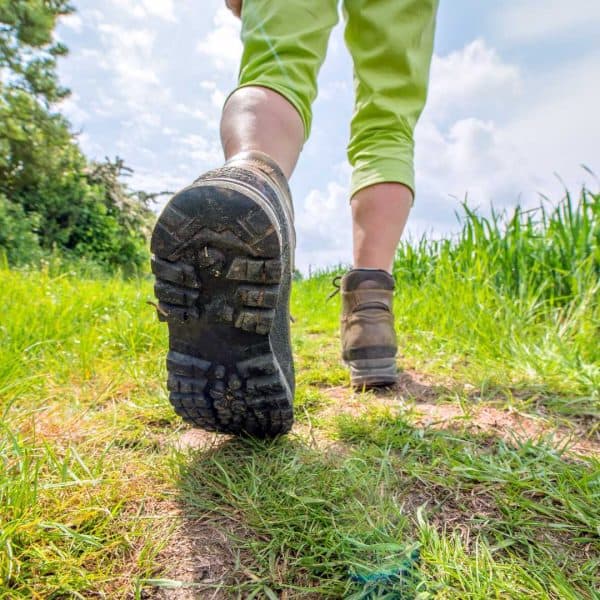
The benefits of walking for physical health– including bone health– are well known. You may be less familiar with Interval Walking Training and how it benefits not only your physical wellbeing but also your mental health.
In this article, we’ll examine research showing how aerobic exercises such as walking change brain chemistry in ways that support mental health. Then you’ll get a guide to Interval Walking Training that you can easily implement on your next walk.
We’ll also review how walking’s mental health benefits wrap back around to support your bones and your ability to prevent and reverse osteoporosis.
Mental Health Benefits Of Walking
Walking benefits bone health directly by stimulating the formation of new bone. Wolff’s Law describes this action: your bone tissue adapts to use by strengthening to support that use.
The benefits of walking go beyond its direct stimulation of bone remodeling. A growing body of research has found that exercise– and specifically aerobic exercise such as walking — has measurable positive impacts on mental health.1, 2
- Preventing Depression Symptoms – Exercise has been shown to reduce pro-inflammatory cytokines, potentially alleviating depressive symptoms associated with inflammation. Exercise also helps improve circadian rhythms and sleep patterns, supporting mood regulation and energy levels.2
- Prevents Cortisol Spikes – The physical stress caused by aerobic exercise prepares your body to more effectively manage psychological stress from outside factors and life events. Both types of stress initiate the release of cortisol, the stress hormone, but what happens next differs significantly.When the body releases cortisol during exercise, it quickly downregulates it to an inactive form and clears it from the system after about two hours. Cortisol released due to psychological stress tends to inundate the system and linger for much longer, causing inflammation and disruption to important processes like bone formation. Regular exercise improves your body’s ability to regulate cortisol released during psychological stress, reducing bone-damaging cortisol spikes and reducing circulating cortisol levels.1
- Enhanced Mood – Endorphins are popularly cited as the neurochemical cause of “runner’s high” — the positive feeling that follows aerobic exercise. However, many scientists dispute this common notion. The feeling is real, but the cause might be different than we think. However, compounds called endocannabinoids—particularly one called anandamide (AEA)—may actually be responsible for these positive feelings. This neurochemical helps to regulate amygdala hyperactivity, giving exercise its ability to alleviate depression and anxiety.1
- Promote Neuroplasticity – Exercise increases levels of Brain-derived Neurotrophic Factor (BDNF). BDNF benefits cognition by enhancing neurogenesis, synaptic plasticity, and long-term potentiation (which facilitates learning). This means that exercise enhances your ability to learn new skills and change. Studies have found that healthy elderly people can increase their serum BDNF levels through moderate intensity walking– which can help to improve or maintain cognitive function that would otherwise decline with age.1
Synopsis
The mental health benefits of walking include amelioration of depression symptoms, improved stress management, positive feelings, reduced anxiety, and increased neuroplasticity that facilitates learning.
A Guide To Interval Walking Training
Interval Walking Training (IWT) was developed in Japan as a physical training method for older adults. It consists of cycles of fast and slow walking. What constitutes “fast” and “slow” depends on who is doing the walking– making it a highly adaptable intervention.3
The original Interval Walking Training protocol consists of
- No less than five cycles alternating between fast and slow walking
- 3 minutes at each speed
- The fast speed should be at about 70% of the walker’s maximum potential intensity
- The slow speed should be at about 30% of the walker’s maximum potential intensity
To start interval walking training, all you need is a timer (most people’s cell phones have one built in) and a place to walk! You can use these instructions to get started:
The Only Workout Program You’ll Ever Need For Your Bones
Your bones need the right kind of movement to stay strong. SaveTrainer gives you safe, science-backed on-demand video workout classes designed specifically to improve bone health, prevent fractures, enhance posture, improve posture, and boost mobility—all from home.

- Set your timer to 3 minutes, but don’t start it yet
- Start your walk at a comfortable, steady pace, intentional, but not fast. This will be your “slow” pace
- Now speed up your walk– not to your maximum pace, but to a quick but sustainable pace that requires some exertion. That will be your “fast” walk
- Once you’ve found your fast pace, start your 3-minute timer
- When it goes off, return to your “slow” pace and restart your 3-minute timer
- When it goes off, return to your “fast” pace and restart your 3-minute timer
- Complete at least five full cycles if you can, walking 3 minutes at each speed, for a total of 30 minutes
- As you build stamina, you can add more cycles
Studies on Interval Walking Training confirm that there are no general safety concerns, even for older adults or people with chronic conditions.3 If you can walk, this is an excellent way to maximize the benefits of walking for exercise.
Synopsis
Interval walking training is highly adaptable to different fitness levels and is easy to implement. Check out the step-by-step instructions above to try it.
Why Mental Health Benefits Also Support Bone Health
A holistic view of health reveals the deep interconnectedness of bodily systems, including the ways mental health indirectly affects bone health.
Following a bone-healthy lifestyle involves building and maintaining habits that support strong bones. Good mental health is essential to this process. Mental health problems such as depression and anxiety can impede your ability to follow through with the bone-healthy behaviors you have planned.
Mental health also includes mood and outlook. Building a positive outlook, with an optimistic view of your potential, is essential to staying on the path to a healthier future. Pessimism and negativity can quickly mire you in doubt and self-judgment that pull you off course.
The cyclical relationship between exercise and mental health can make it hard to know how to break a negative cycle of poor mental health and inadequate exercise and start building a positive cycle of good mental health and regular physical activity.
Simple exercises such as Interval Walking Training offer excellent ways to increase physical activity levels when mental health challenges make it difficult to begin a more intensive program. It’s important to start where you are, take things one step at a time (literally!), and remember that every action represents progress, no matter how small.
Synopsis
Your mental health has indirect impacts on your bone health via the bone-healthy behaviors that mental health can either support or impede. Break the cycle of poor mental health and inadequate exercise by introducing simple but effective physical activities such as interval walking training.
What This Means To You
Strap on your walking shoes and give Interval Walking Training a try. Better yet, find a friend or two and challenge each other to make this exercise a new shared activity. Sometimes, adding a social element to your workouts can help you stay accountable to sticking with them.
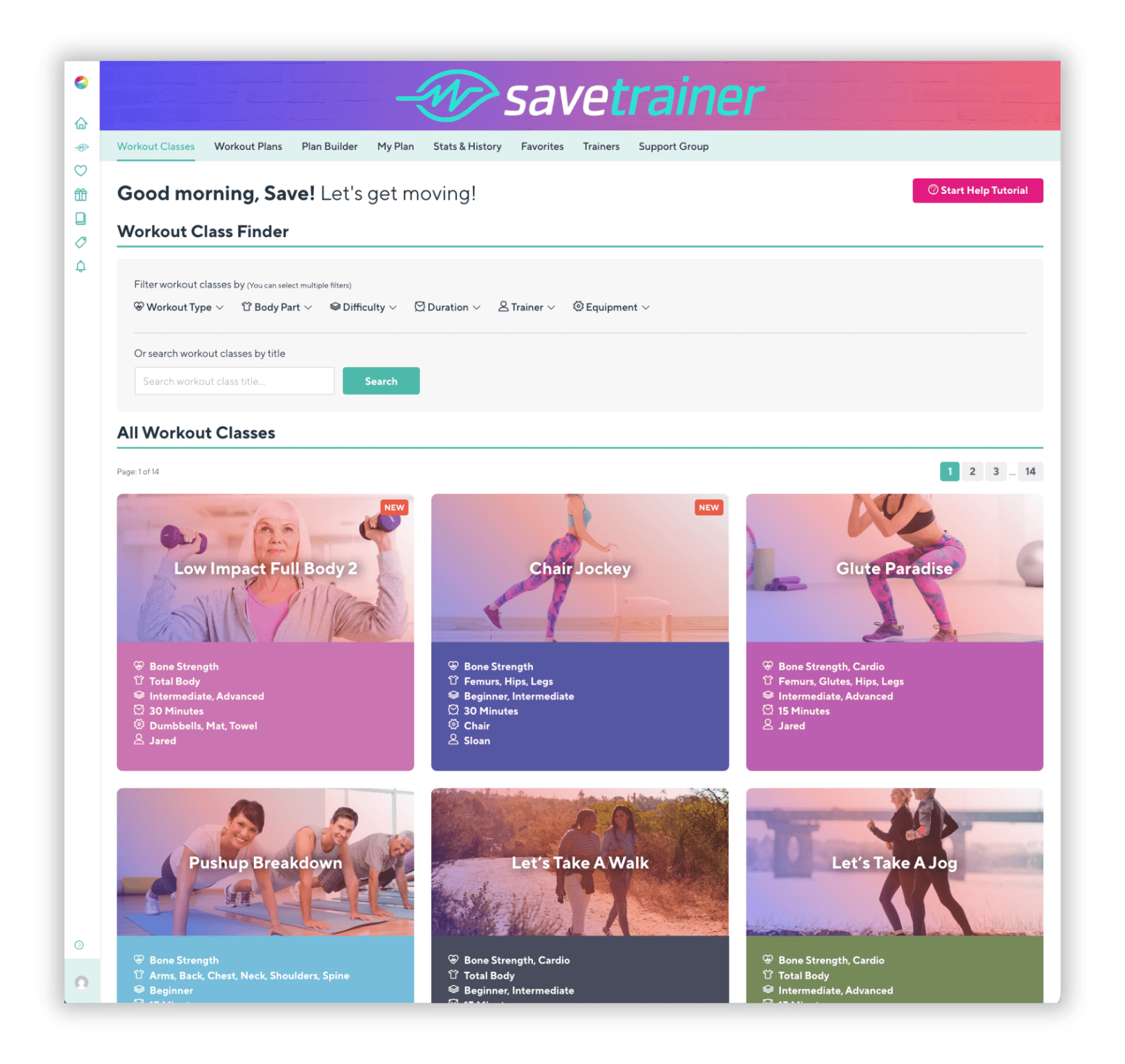
Once you’ve got IWT firmly in your routine, check out SaveTrainer to learn your next bone-targeted exercise. SaveTrainer is the Save Institute’s online video-workout platform. It’s filled with expert-led video classes designed to meet you where you’re at.
Whether you’re an experienced athlete or just getting started, SaveTrainer has workouts at your level, available anytime, anywhere .
Don’t delay the start of your journey to stronger bones, better health, and an active, independent future.
Most Workouts Weren’t Made for Your Bones
If you’re living with osteoporosis or osteopenia, it’s natural to worry about doing the wrong exercise. Generic programs weren’t built for you — making getting started feel overwhelming.
That’s why we created SaveTrainer…
Bone-safe on-demand video workout classes that keep you strong at every age.
Try SaveTrainer free for 14 days today and get full access to the bone-building exercise platform.

References
1 https://www.frontiersin.org/journals/psychology/articles/10.3389/fpsyg.2015.01890/full





Vivian, thank you for this article. At 93 years old walking 2 miles a day. Will try doing interval walking. Walking to me so important I reversed osteoporosis by not taking medication for it.
Have been your follower for years. Keep up the good work you do.
A Very Merry Christmas to you, Vivian! Thank you for all your good advice to keep us seniors moving!!
Darlene
A Merry Christmas to you too, Darlene! And you’re very welcome!
So good to know that we can do this while walking to get more benefits. Thanks!
My pleasure, Sharon!
Thank you Vivian! I can’t wait to try this!
You’re welcome, Kathy!
I am a 79 year old woman who had a thyroidectomy, and parathyroidectomy at the end of last May. The year before I had cataract surgeries on both eyes. I have to take synthroid for the rest of my life. The endocrinologist also had me on Fosamax for about a year – also during this time period. I have taken myself off it. The hyperparathyroidism had been going on for years until I found out about it. Four parathyroid glands were removed (one being in the left lobe of the thyroid). Fortunately I had two extra. I have osteoporosis caused by this. After the surgery I mentioned to the endocrinologist that now I don’t have to take Fosamax anymore since the reason for it is gone. She said, “dream on”. The pathology of the right lobe showed nodules, and cancer. Well, that’s gone. I have started reading your articles, on food, and exercise. Do you have any more advice, or how should I tell my doctor I’m not taking anymore bone drugs? Char
Thanks for sharing your story with us, Char. So glad to know you solved those health issues!
Unfortunately, your doctor is not the exception, so in the Osteoporosis Reversal Program we include Doctor Communication Tutorials where you’ll find detailed information about how to deal with doctors who keep insisting on prescribing osteoporosis drugs.
I hope this helps and I wish you good health and a happy life!