


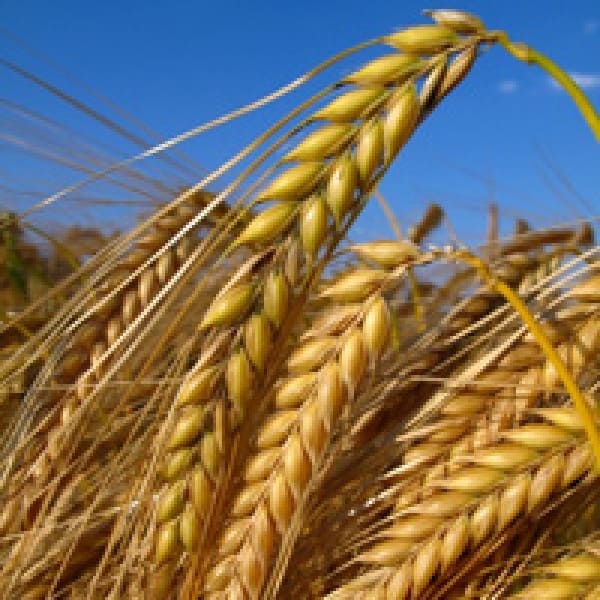
As winter approaches, thoughts turn to curling up in front of a cozy fireplace with a bowl of warm soup. Comforting foods that warm your belly and soothe your soul are just the ticket for warding off the chill of winter. Barley, with its rich, creamy texture and subtle nutty flavor, is a perfect comfort food.
If you love barley – as I do – you’ll be pleased to discover that it is loaded with bone health benefits. In fact, it’s a Foundation Food for its high levels of silicon (more about that later) and other important bone healthy nutrients.
If you’re thinking, “Hold on, I thought barley was acidifying,” you’re right – it is, but that doesn’t mean you can’t enjoy it. The Osteoporosis Reversal Program isn’t about eliminating acidifying foods from your diet – there are many acidifying foods that are loaded with bone health benefits. It’s all about balancing acidifying and alkalizing foods in the right proportions.
If you haven’t already, check out the rest of my continuing series on bone healthy acidifying foods:
Include This ‘Superstar’ Fruit to Build Your Bones
The Truth About Eggs and Your Bone Health
Drink This, Not That For Better Bone Health
Eat This Nut to Build Your Bones
And read on to find out why barley makes a great bone healthy addition to your diet.
First, a Few Historical Notes
Barley has a rich and fascinating history dating back more than 10,000 years. Barley beer was one of the first beverages made by our Neolithic ancestors, and fermented barley is still used in beer and other alcoholic drinks.
Ancient Greeks and Romans revered barley and used it extensively in their training diets. In fact, according to Pliny the Elder, a noted Roman philosopher and historian, ancient Roman gladiators were sometimes known as hordearii, which can literally be translated to “eaters of barley.”
And as incredible as it may sound, barley was used as currency by the Mesopotamians, and the ancient Chinese viewed barley as a symbol of masculinity.
The ancients were right about barley, because it contains…
A Bonanza of Bone Health Nutrients
Barley merits a mention on the Foundation Foods list for its silicon content, an important trace mineral that has been shown to affect connective tissue such as collagen and the growth and mineralization of bone. If you haven’t already read it, take a look at ‘The Incredible, Crunchable Cucumber’ to find out more about how silicon/silica affects your bones.
But silicon is just the beginning of what barley has to offer. It’s also:
- An excellent source of manganese, a Foundation Supplement that’s necessary for the synthesis of connective tissue in cartilage and bone. It’s also involved in protein synthesis and fatty acid metabolism.
- A rich source of copper, another Foundation Supplement and too often ignored trace mineral. Copper is for the activity of lysyl oxidase, an enzyme involved in cross-linking collagen and elastin, both of which provide the ground substance and flexibility in blood vessels, bones and joints. One cup of cooked barley provides 32.0% of the daily value for copper! (As a side note, copper is also essential for combatting rheumatoid arthritis.)
- A rich source of selenium, which is essential for thyroid hormone synthesis as well as for antioxidant production.
- Along with other grains, barley is a good source of phosphorus, which forms part of the bone matrix – the complex of nutrients and minerals that gives flexibility to the bones so they can resist breaking.
And going beyond bone health…
Barley is a Fiber Superstar
One of barley’s main claims to fame is its fiber content. A cup of barley gives you 13.6 grams of healthy fiber. Compare that to 3.98 for a cup of oatmeal, or 4.0 for a medium banana. But beyond the volume of fiber, the type of fiber in barley brings it to superstar status. When the “friendly” bacteria in your large intestine ferment the insoluble fiber contained in barley, the result is butyric, a short chain fatty acid that is partially responsible for colon health. Two other short chain fatty acids produced by this fermentation process aid in liver health and help to lower cholesterol.
And in one study, barley was found to be even more effective than oats in reducing glucose and insulin responses in individuals with Type 2 diabetes.1
Buying and Storing Barley
The most important thing to know about buying barley is that all barley is not the same. The pearl barley that you may be accustomed to seeing in the supermarket is highly processed to remove the bran layer that contains most of the fiber, as well as much of the inner endosperm layer, which contains many of the nutrients. Pearl barley is in the same category as other processed grains that are largely devoid of nutrients, and it can’t be considered a whole grain.
Look for hulled barley (also called dehulled barley), which has only the tough, inedible outermost hull removed. You’ll have to rinse this type of barley and cook it a bit longer, but the nutrient content and richer flavor make it worthwhile.
In addition to whole, round barley, you’ll find flakes and grits, both of which can be made from either hulled or pearl barley. So if you’d like to try one of these varieties, make sure to look for hulled or dehulled, rather than pearl.
You can buy barley either prepackaged or from bulk bins. As is true for any food in a bulk bin, make sure the bins are well-covered and that there’s no visible moisture. It’s also a good idea to purchase only from bulk bins in stores with high turnover, so you’ll be more likely to get a fresher product.
And of course, organic is always preferable!
Store barley (again, just like other grains) in a cool and dry location, preferably in a glass container with a tight lid. You can also store barley in the refrigerator, and this may be necessary in warmer climates.
Preparation and Cooking Tips
To prepare hulled barley, rinse it under running water and be sure to remove any dirt or debris.
Here’s the simplest way of cooking barley:
1. Bring water or broth to a boil (about 3-1/2 cups of liquid for every cup of barley)
2. Add barley and bring the liquid back to a boil
3. Reduce the heat and simmer the barley for about 90 minutes
And here are a few more barley tips:
- Cracked barley or barley flakes make a great breakfast cereal!
- Add cooked barley to a mixed veggie salad – delicious!
- Add barley to stews, soups and other dishes. Feel free to use your imagination.
And if you haven’t yet, be sure to check out Vivian Answers Day #10 for one of my favorite barley recipes: ‘Mom’s Hungarian Mushroom Barley Soup’ (yep, it’s really my mom’s recipe)!
And here’s another one of my all-time favorites.
Not Just Mushroom Barley Pilaf
Note: This recipe uses cooked barley, which makes it super quick and easy! Using the directions shown above, cook the barley ahead and store in your refrigerator until you’re ready to make the pilaf. Cook up a bunch of extra barley so you’ll have it on hand to toss in salads and other dishes.
4 servings
Ingredients
1 tablespoon avocado oil
1 small onion, finely chopped
1 cup mushrooms, sliced
3/4 cup hulled barley, cooked
4 basil leaves, fresh or dried
2 large carrots, finely chopped
1 red bell pepper, finely chopped
2 teaspoons grated lemon peel
Sea salt and pepper to taste
Directions
Heat oil to medium-high heat and sauté until onion begins to soften, about 4 minutes. Then add the mushrooms.
Sprinkle the mixture with salt and pepper to taste.
Add barley, and while constantly stirring, heat for approximately 3 minutes.
Add basil, stir a little, cover pot, and heat for an additional 2 minutes.
Stir in carrots and bell pepper. Cover pot and cook until vegetables are tender, about 6 minutes.
Remove from heat, stir, and let stand in covered pot for 10 minutes or so.
Stir in lemon peel, and serve.
Enjoy!

References
1 van Dam RM, Hu FB, Rosenberg L, Krishnan S, Palmer JR. “Dietary calcium and magnesium, major food sources, and risk of type 2 diabetes in U.S. Black women.” Diabetes Care. 2006 Oct;29(10):2238-43. 2006.






I would like to know if iodine supplements – iodoral or kelp is good for your bones? How Does the thyroid gland have an effect on the overall health of the body especially the bones and teeth?
In addition to the below comment about the discrepency between winter squash being alkalizing v. acidic, I was also wondering whether spelt is alkalizing or acidic. On the list of alkalizing v. acidic grains in the Save Our Bones program manuel, spelt is listed on BOTH the alkalizing and acidic side of the chart. Please advise. Thank you.
In the Osteoporosis Reversal Program, page 102, winter squash is acidifying. In the Densercise Eating Guide, page 11, winter squash is alkalizing. So which one is it???
Thanks for all the info on bone health.
Pamela
DEAR VIVIAN, HOW MUCH MANGANESE IS NEEDED DAILY FOR ABSORBING CALCIUM FORMULAS AND FOR MAKING THYROXINE.? PLEASE GIVE AMOUNTS NEEDED OF SUPPLEMENTS YOU RECOMMEND.
TOO LITTLE IS NOT ENOUGH.
TOO MUCH IS IS NOT ENOUGH
ONLY ENOUGH IS ENOUGH.
HOW MUCH IS ENOUGH?????AND IS THERE A TOXIC AMOUNT FOR Mn??? Thanks, Estelle
Would like to hear some more pros and cons with respect to Vitamin K2 for improving Bone Density.
VIT K2 THEY SAY, HELPS PUT INGESTED CALCIUM INTO THE BONES RATHER THAN IN ARTERY WALLS, THE LATTER CAUSING ATHEROSCLEROSIS AND HEART ATTACK OR STROKE EVENTUALLY. I BELIEVE IT ALSO TAKES PRE-EXISTING CALCIUM DEPOSITS OUT OF ARTERIES AND MOVES IT TO THE BONES. CAN ANYONE VERIFY THIS, PLEASE? PEOPLE ON BLOOD THINNERS NEED TO TAKE K2 ONLY UNDER SUPERVISION FROM A PROFESSIONAL WHO IS KNOWLEDGIBLE ABOUT SUPPLEMENTS, NOT YOUR AVERAGE DOCTOR. A COMPLEMENTARY DOCTOR OR NUTRITIONIST, OR SOME CHIROPRACTORS WHO KNOWS SSPPLEMENTS WELL. THERE ARE MANY WHO DO. THE ALTERNATIVE PROFESSIONALS AND COMPLEMENTARY MD’S.
Hi Vivian,
You write in your book that beans (Black)and Legumes are acidic. But beans and Legumes are good sources of protein for vegetarians. I have them once a day. Is this going to make my food intake more acidic.
You mentioned above that milk is acidic and not good for bones. I believe yogurt is alkaline.
Thanks.
Ashok Agrawal
I have been using Bone Strength by New Chapter. Each capsule has 256.7mg calcium from algae mag.19.3mg from algae vit d3 8.33mcg.vit k 11.7mcg also vanadium from algae strontium from algae and silica from algae. Its gluten free. I take 3 capsules per day. The only draw back its expensive.
IN RESPONSE TO THE PERSON TAKING NEW CHAPTER CALCIUM FORMULA: SHE DOESNT MENTION VIT K2 (MK7) IN IT. IF ITS ONLY K1 IN THERE, ITS LACKING K2,( MK7 AND MK4 FORMS.) THE LATTER 2 ARE THE FORMS OF VIT K FOR REMOVING CALCIUM DEPOSITS FROM ARTERY WALLS AND INTO BONES, AND ALSO FOR TAKING INGESTED CALCIUM TO THE BONES, RATHER THAN DEPOSITING IT IN THE ARTERIES WHERE IT CAN CAUSE HARDENING AND EVENTUAL HEART ATTACK OR STROKE. HOW ABOUT GALLSTONES AND KIDNEY STONES, VIVIAN? AND JOINTS? NEW CHAPTER IS TOO EXPENSIVE. SEEMS TO ME IT DOESNT HAVE ENOUGH OF WHAT’S NEEDED. DOES IT HAVE K2? IF SO HOW MUCH? HOW DO YOU KNOW THAT CALCIUM FROM ALGAE IS THE BEST? WHY IS IT BETTER, VIVIAN? THANKS, ESTELLE
I TAKE “BONE RESTORE” FROM LIFE EXTENSION FOUNDATION. SEVERAL FORMS OF DIGESTABLE CALCIUM, THEY CLAIM. THEY ARE GREAT, SUPPORTIVE PEOPLE TO DEAL WITH AND MEMBERSHIP OFFERS FREE PHONE CONSULTS WITH NATUROPATHIC DOCTORS AND OTHER DOCTORS WHO KNOW HERBS AND SUPPLEMENTS, AND THEY HAVE A GREAT MONTHLY MAGAZINE WITH CUTTING EDGE RESEARCH ON SUPPLEMENTS AND WARNINGS ABOUT DRUGS, CT SCANS, X-RAYS, AND ALSO ABOUT ALTERNATIVE TREATMENTS ETC, I HIGHLY RECOMMEND THEM. ANTI-AGING ETC.SUPPORTIVE AND MONEY BACK GUARANTEES. LEF.COM THERE ARE OTHER GOOD SUPPLEMENT AND EDUCATIONAL SITES AND ELETTERS ON THE WEB. BYRON RICHARDS GIVES EXCELLENT PODCASTS WEEKLY TO SUBSCRIBERS, FREE, AND SELLS SUPPLEMENTS HE FORMULATES. WELLNESS RESOURCES IS THE NAME OF HIS BUSINESS. HIGHLY RECOMMENDED. A BIT EXPENSIVE BUT THE PODCASTS ARE FREE. ESTELLE
?
I have just finished reading Save Our Bones and stopped taking Fosomax.You mention using Stevia in lieu of sugar. Is any brand of Stevia OK? Like Truvia or Stevia in the raw? Some show other chemicals or dextrose as part of the ingrediants so I am concerned. Also are there any limitations as to the amount of almond milk we should drink?
Love to here from you Vivian
Hi there is a very great article on mercola.com with detailed explanation about stevia itself and those products on the market .hope it will answere your question 🙂
This article on Barley is very good information for everyone except those of us who are gluten sensitive. So Sad.
I follow your items with great interest but are very sorry about the foods you recommend as I have a food intolerence problem. In the recipe above it involves the barley (being gluten) mushroom, lemon ( all citris)peppers.I also have alergies to egg, dairy,potatoes pears,avocado, sugar, corn,soy and apricot. I would be very interested to hear from you with your thoughts on this. Bev.
Deb, have you hears about GAPS ? Maybe you need to start doing that in order to eliminate your food allergies . Mostly people refer to GaPS in connection to autism , but there are many evidence from many people without autism who did it to restore their IG normal function . There are many great videos on YouTube with lectures and books of course . Hope it will help:)
Sorry , I misspelled your name Bev , not Deb , ops:(
Can anyone tell me what is a milk substitute?
Soy Milk, Almond Milk, Hemp Milk, Coconut Milk
RE MILK SUBSTITUTES: THERE ARE SEVERAL. I FIND ALMOND MILK TO BE THE BEST. TRY SEVERAL KINDS AND BRANDS SOME PLACES ARE CHEAPER THAN OTHERS. SHOP AROUND.THEY USUALLY COME IN 32OZ AND 64OZ SIZE BOXES, OCCASIONALLY SMALLER SINGLE SIZE SERVINGS OR 4 PACKS. RICE MILK, SOY MILK (NOT RECOMMENDED AS IT DEPRESSES THE THYROID AND INTERFERES WITH THRYOID DRUGS.)HEALTH STORES AND EVEN REGULAR SUPERMARKETS SELL THESE IN THE U.S. THERE ARE ALSO HAZELNUT MILK, HEMPSEED MILK,(MORE EXPENSIVE) AND AMAZAKI IN SOME HEALTH STORES IN THE U.S.(REFRIGEREATED) IN PINT SIZES. SOME MILK SUBSTITUTES HAVE CALCIUM AND VIT D ETC ADDED BUT NOT THE OTHER NUTRIENTS NEEDED TO METABOLIZE CALCIUM,…. LIKE MAGNESIUM, SILICA, BORON, MANGANESE, ZINC, VIT C. SO ITS BEST TO ALSO TAKE A GOOD CALCIUM FORMULA WITH THE RIGHT FORM OF CALCIUM (NOT CARBONATE) AND CO-NUTRIENTS IN ADDITION TO THE MILK SUBSTITUTE. SO, A MILK SUBSTITUE SHOULD BE ONE OF THE ABOVE NUT OR RICE MILKS. ALMOND MILK IS BEST FOR ALKALIZING AND SOOTHING GERD SYMPTOMS, AND ALSO TAKE A GOOD CALCIUM FORMULA IN SUPPLEMENT FORM. ALMOND AND RICE MILK COME IN VANILLA, CHOCOLATE AND PLAIN (ORIGINAL). SOME ARE FORTIFIED WITH NUTRIENTS, SOME NOT. AND SOME ARE UNSWEETENED, AND SOME SWEETENED. I DONT KNOW WHATS AVAILABLE IN OTHER COUNTRIES. YOU CAN ALSO MAKE YOUR OWN NUT OR RICE MILK. IMAGINE FOODS ALSO MAKES HORCHATA RICE DREAM…RICE MILK BASED WITH SUGAR AND CINNAMON. TASTES GOOD.NOT SURE OF ITS pH. IN CALIFORNIA, I KNOW THAT TRADER JOES HAS THE BEST PRICES ON NUT AND RICE MILKS. ALMOND BREEZE IS MY BEST ONE.
REMEMBER THESE SUBSTITUTES ONLY SUBSTITUTE FOR THE TASTE, APPEARANCE AND TEXTURE OF MILK, BUT DO NOT SUPPLY THE SAME AMOUNT OF NUTRIENTS AND PROTEIN AS MILK. AND MOST ARE ALKALINE.
THERE’S A WHOLE GRAIN MILK AVAILABLE AT TRADER JOES. MOST RICE MILKS ARE NOT FROM BROWN RICE. SOME MILK SUBSTITUTES ARE ORGANIC, SOME NOT. THEY VARY IN TASTE AND NUTRIENTS ADDED OR NOT. TRY THEM ALL AND COMPARE.
I HAVENT DRUNK DAIRY MILK IN ABOUT 30 YEARS, BUT I DO USE YOGURT AND KEFIR OCCASIONALLY, WHICH ARE DAIRY. IF PLAIN AND SUGAR-FREE, THEY ARE ALKALINE…AND CONTAIN PROBIOTICS WHICH ARE HEALTHY. NOT SURE IF THESE PROBIOTICS SURVIVE STOMACH ACID.MAYBE A LITTLE DO. HOPE THIS HELPS PEOPLE. ESTELLE
Hi Vivian;
I have always loved barley in soups and stews
so am glad to learn more about its benefits.
Thanks. Louise
Hi Vivian; I haven’t made barley in a long time; but, now that I know that is good for the bones, I will star making it; I love it, sometimes I mix it with feta cheese, it just taste delicious.
Thank you for the Mushrooms Barley Pilaf recipe, I will make it this week.
Regards,
Irma
Cover barley in water and let it soak overnight, it then requires less cooking and is made healthier. Even better add some freshly ground rye flour to the water in which barley is soaked.
This removes more anti nutrients.
I need to know if you know where to get Big,huge inside csyts on the knees,inside,surgigally repaired.I have Bakers knees.Both.Thank you !
I bought ascorbic acid crystals to help in food preservation – and found it is an easy way to get extra quick vit. C. I know it is acid, as are the citrus fruits, but since it is processed, is it highly acidifying, unlike the citrus fruits? How much would likely be too much to add to the daily diet?
Vivian,
I just finished reading your Osteoporosis Reversal Program . . . excellent info. I know Calcium requires D3 and Magnesium.
MY QUESTION: Should my Calcium supplement include D3 and Magnesium? Or should I take D3 and Magnesium as totally separate supplements later in the day?
Many thanks,
Tammye
Hi! Vivian,
Thank You VERY MUCH For Giving Us Such Good Information About Barley, And How It Helps Our Bones.
I LOVE Barley! It’s One Of My FAVORITE GRAINS!
And That Mushroom Barley Pilaf Recipe SOUNDS DELICIOUS!
Thank You Again VERY MUCH For EVERYTHING!
LOVE, MS. L.
Vivian
What are your thoughts on GREENS PLUS BONE BUILDER ………..It was recommended to
me and I HAVE BEEN USING IT FOR SOME TIME
Love to hear your thoughts……..Ginny
Ginny, while I don’t have the resources to research all the supplements on the market (there are simply too many, with new ones coming out every day), I did take a quick look at the ingredient list. Greens Plus Bone Builder appears to be a decent product, and the calcium in it is chelated, which is an acceptable substitute for organic calcium.
I bought some of this and find it almost impossible to drink! Do you have any ideas how to make it a more palatable drink? Hope so.
The information about the benefits of barley is helpful, except for those who suffer from gluten intolerance. It is possible to eat a balanced bone healthy diet without it. But it can be very frustrating, because potentially harmful grains are everywhere. Can you help?
Joy
Joy, please see my reply to Rachel below.
Thanks,Joy. Was scrolling to see if someone had posted about barley and gluten. Shouldn’t this information be at the top of the article?
When we make vegetable soup or split pea all our ingredients are alkaline except for the broth which is organic chicken broth. We’ve tried all the brands of vegetable broths but they’re all so sweet they spoil the flavor. Does the chicken broth ruin the balance of the soup, does it make it acidic?
Diane
Diane, there’s no problem with using chicken broth. Remember, nothing’s off limits on the Save Our Bones program. As with any other acidifying food (like barley!), it’s all about balance. If your soup is largely alkalizing veggies, adding some chicken broth won’t make the entire soup acidifying. Just look at the proportions. And if the soup does tend to be more on the acidifying side, you can always balance it by adding a large veggie salad. 🙂
Unfortunately I have osteoporosis from being late diagnosed as a Coeliac (when I was 40), and the damage done in calcium and other deficiencies, by not being previously diagnosed, has given me serious bone health problems.
Barley would NOT be a good idea as it contains Gluten! (As does virtually everything that’s good and tasty! 🙁 )
Bob, the number of people diagnosed with celiac is going up as well as those who can’t get a diagnosis but realize that food with gluten make them sick. Yes, it’s unfortunate that the gluten containing grains are so tasty and useful in cooking but there are still lots of other choices. The bone health people have not explored these enough, in my opinion, because so many people with osteoporosis are also gluten intolerant.
Tonight I’m going to a tasting run by dietitians at my local grocery of gluten free alternatives — there will be several kinds of quinoa; I also use corn flour, blue corn flour, sorgum, and things I find in Asian groceries, like cassava grits, that are ignored by American nutritianists. The downside is you have to like to cook and be an adventurous eater, which I am, but I realize people who first learn they are gluten free have a rough time finding replacements and learning to cope with a changed diet. Good luck, Linda
RE CASSAVA: I ONCE READ IN THE NOW DEFUNCT FELIX NEWSLETTER IN THE 70’S BY THE LATE CLARA FELIX, THAT CASSAVA ROOT IS BAD FOR PREMENOPAUSAL AND MENOPAUSAL WOMEN…SOMETHING TO DO WITH ESTROGEN…I FORGET EXACTLY HOW, BUT I JUST REMEMBER TO AVOID CASSAVA. DOES ANYONE KNOW WHY CASSAVA IS BAD FOR WOMEN AT AND BEYOND PERI-MENOPAUSE? ESTELLE
Bob, please see my reply to Rachel below. As far as everything good and tasty containing gluten, have you tried quinoa? It’s delicious, and can be substituted for other grains in most recipes. 🙂
Dear Vivian,
I sarted reading a new book called “Wheat Belly” by Dr. William Davis. It mentions that the wheat we now eat is not healthy for us due to genetic modification. The books suggests that by eliminating wheat gluten that one can improve one’s bone density and reverse osteopenia and get rid of the belly fat.
So far, Gail, wheat is not genetically modified (in a lab). However, those who are gluten sensitive may experience nutrient malabsorption, which could have an effect on bone density and other conditions.
THANKS VIVIAN, FOR YOUR COMMENT ABOUT MALABSORPTION OF NUTRIENTS IN GLUTEN SENSITIVE PEOPLE. MAKES SENSE. IS THIS BECAUSE OF LEAKY GUT AND DAMAGED EPITHELIAL LINING OF THE SMALL INTESTINES? OR NOT ENOUGH ACID IN STOMACH? I’M TAKING L-GLUTAMINE, 5g DAILY POWDER TO HELP REPAIR MY PROBABLE LEAKY GUT. AND TRYING TO WEAN MYSELF OFF GLUTEN AND ALSO TAKE CHAMMOMILE AND LICORICE TEA AND ALOE VERA JUICE…HOPEFULLY TO HELP GERD, STOMACH POLYPS AND REPAIR MY INTERSTINAL WALLS. WHAT DO YOU THINK? WILL IT WORK? IS THERE ANYTHING ELSE I CAN TAKE?
I HAVE HASHIMOTOS TH.AND O. ARTHRITIS, SO I ASSUME I PROBABLY HAVE LEAKY GUT, INDUCED BY GLUTEN. WHAT DO YOU THINK? AND WHAT TESTS CAN VERIFY THIS, PLEASE? I TAKE PROBIOTICS AND ENZYMES ALSO. ..AND CURCUMIN, AND LOTS MORE SUPPLEMENTS, INCLUDING A BONE FORMULA AND KI AND K2. + CHLORELLA. VERY LOW SUGAR. THANKS MUCH, ESTELLE
THANKS FOR SHARING ABOUT MODIFIED WHEAT AND BONE WEAKENING. ALSO THERE’S TOO MUCH WHEAT AVAILABLE. THAT’S PROBABLY WHAT CAUSED GLUTEN INTOLERANCE, LEAKY GUT, AND PARTIALLY AUTOIMMUNE DISEASES. GLUTEN FREE CRACKERS AND SOME COOKIES ARE BLAND AND EXPENSIVE AS ARE MOST GLUTEN FREE FOODS. I CANT AFFORD GLUTEN FREE BREADS.
ITS DIFFICULT FOR ME TO WEAN MYSELF OFF GLUTEN BECAUSE OF TASTE AND MONEY. I HAVENT TRIED QUINOA YET. HOW ABOUT KAMUT? IS IT GLUTIN FREE? AND AMARANTH.?
THANKS. ESTELLE
Hey Everyone,
Enjoyed the update on Barley from Vivian! Now I have a question for the masses: Can anyone recommend an organic algae calcium supplement with the required amounts of D3 and Magnesium (Chelated)?
Thanks in advance for the info!
Blessings,
Tammye
Marlene,
Thanks so much for the info. I’ll check out that website.
Anyone else have info to share?
Tammye
LIFEEXTENSION.COM SELLS
“BONE RESTORE” WITH SEVERAL FORMS OF CALCIUM AND CO-NUTRIENTS. THEY SELL K2+KI SEPARATELY..SUPER K. THEY CLAIM IT IS WELL ABSORBED. GIVE THEM A CALL FROM THE # ON THE WEBSITE. THEY ARE A CARING NON-PROFIT GROUP OF DEDICATED, SCIENTISTS, NATURAL HEALERS, MDs NATUROPATHIC DRS AND OTHER PRACTITIONERS SPECIALIZING IN ANTI-AGING AND ARE VERY HELPFUL. SEE MY OTHER NOTES ABOVE ABOUT THEM. CAN VIVIAN PLEASE CHECK OUT THIS BONE RESTORE FORMULA AND REPORT WHAT YOU THINK ABOUT IT, PLEASE. TOO MANY KINDS OF CALCIOUM WITH LONG NAMES TO LIST HERE. THANKS, ESTELLE
‘
You could look into Oseto by Enerex. It says Bamboo Silica & Raw Superfoods on the front of the label. Each tablet has 500 mg calcium, 500 mg magnesium, 20 mg boron (all HVP Chelate),17 mg silicon, 2.5 mcg of D3 and 30 mcg of K2. They suggest 3 tablets a day with meals. I wonder if 2 tablets a day would be enough. I was taking Algaecal till it became unavailable in my city.
WHAT IS THE EQUIVALENT AMOUNT OF D3 IN INTERNATIONAL UNITS IN THIS OSTEO FORMULA? HOWCOME THEY LIST IT IN MCG? AND HOW MUCH DOES IT COST PER MONTH? THANKS ESTELLE
IF YOU CANT GET ANYTHING IN YOUR CITY, THERE ARE MANY OTHER PERVEYERS OF SUPPLEMENTS BY PHONE OR WEB MAIL ORDER. SWANSENS HEALTH PRODUCTS, LIFE EXTENSION.COM, TRIBEST, NUTRICOLOGY ETC. AND OFTEN BETTER PRICES THAN LOCAL STORES. GOOD LUCK. LET US KNOW WHAT YOU FIND. ESTELLE
ISNT THIS TOO LITTLE CALCIUM? HOW MUCH DOES IT COST TO TAKE THE RECOMMENDED DOSAGE PER MONTH, PLEASE? THANKS ESTELLE.
As a child my mother made the best beef veggie soup with barley. Now however I have celiacs disease and can no longer have it. I do eat Quonia which is probably older than barley and may just provide the same benefits.
I love barley….but have gluten-intolerance, so can’t have it anymore! =(
Supposedly, Queen Elizabeth has been drinking a lot of a barley drink everyday, according to a palace cook. The drink is made like the standard cooking recipe for barley in this article. Then the liquid is preserved by draining off and removing the barley, and 5 orange skins are added to the cooking liquid. When cool, the juice of the oranges is added. It is, as far as the Queen is concerned, for cleansing the body.
Susan, I’d love to know where you got this information about our Queen – it’s a new one on me!
Sounds like Rejuvelac created first by Ann Wigmore. It is a femented drink which can be made by Quinoa also. Many examples of making it on You Tube.
Thank you Vivian for all your posts. I am feeling that there is no good in taking any calcium supplements. I eat Raw Vegan and get a lot of greens. Could I get what I need from raw fruits and vegetables if diligent? Thanks,Lynn
Lynn, I do advocate calcium supplementation, but in most cases, we don’t need nearly as much as we’ve been led to believe, and quality is much more important than quantity. If you haven’t already, please read my free Ultimate Calcium Guide. You can get it at https://saveourbones.com/the-ultimate-calcium-guide/
I’m very interested in uncreasing my
Bone density, since I train in martial arts. Thank you! Sincerely, Kenneth D.
Unfortunately this is one of the 5 grains I cannot have as I’ve got Coeliac disease. I do eat alot of quinoa and rice though. R
Rachel, it’s true that barley is one of the gluten-containing grains, and those with either celiac disease or gluten insensitivity should avoid it. But as far as your bone health is concerned, that’s not an issue — If you have a problem with a particular food or food group, you can still be successful on the program. When I talk about the benefits of a particular food, it certainly doesn’t mean HAVE to eat that food to improve your bone health. It’s just one choice among many. (And quinoa is a wonderful, alkalizing non gluten-containing grain, so continue to enjoy it!) 🙂
Thanks Vivian for all your good advice:-) R
Can anyone please tell me where in the UK one can buy hulled/dehulled barley?
I live in rural Kent.
Dear Vivian, in the UK you would be made a “DAME” in recognition of your marvellous, so well researched work for our bone health.
Keep on advising us all.
Rita