


Most fractures in older adults are caused by falls. That makes reducing fall risk an absolute necessity for protecting your bones. In this article, we’ll review five lesser-known factors that increase fall risk in older adults.
You’ll learn about each risk factor, how it affects balance, gait, coordination, the ability to recover from a misstep, and what you can do to minimize those risks, thereby preventing falls and fractures.
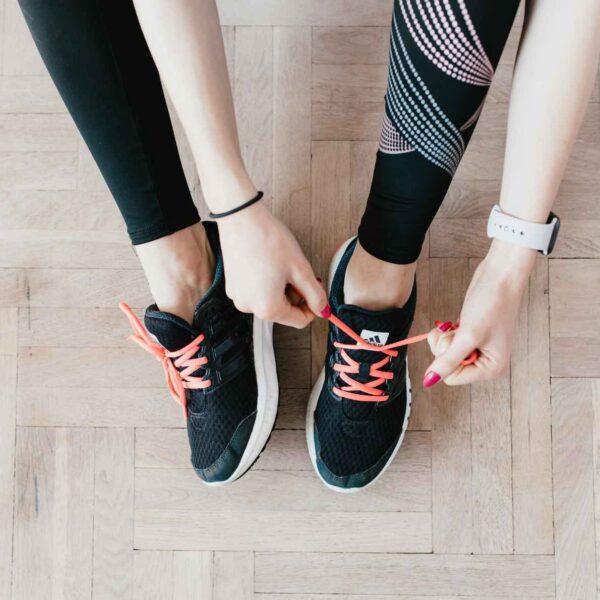
Foot Problems And Ankle Mobility
Preventing falls prevents fractures. A 2018 systematic review and meta-analysis published in the journal Maturitas analyzed foot problems as a risk factor for falls.
The review found that older adults who fell were more likely to have foot pain, hallux valgus (commonly known as a bunion), plantar fasciitis, reduced ankle dorsiflexion range of motion, weaker toe plantarflexion strength, impaired tactile sensitivity, and increased plantar pressure while walking.1
The study found that foot and ankle risk factors are independently associated with falls, meaning that even when other risk factors were accounted for, foot and ankle issues increased the risk of a fall. 1
A study published in the British Medical Journal found a reduction in falls following a multifaceted foot-and-ankle-based intervention. The study included 305 participants with disabling foot pain and an increased risk of falling. About half of the participants received a multifaceted podiatry intervention consisting of foot orthoses, footwear advice, a footwear subsidy, a home-based program of foot and ankle exercises, a booklet about fall prevention, and routine podiatry care. The control group received only routine podiatry care.2
After 12 months, the intervention group experienced 103 falls, compared to 161 in the control group. The more robust foot-and-ankle intervention resulted in a 36% lower rate of falls. The study reported that the intervention group also showed greater improvements in ankle strength, range of motion, and balance.2
Addressing foot problems with a podiatrist, choosing footwear that supports balance and foot and ankle health, and performing exercises that improve mobility and balance all help reduce this risk factor.
Synopsis
Foot and ankle problems raise the risk of falls. Reduce risk by addressing foot issues with a podiatrist, choosing supportive footwear, and doing foot and ankle exercises to increase mobility and balance.
Ready to Put This Into Action?
Reading about bone health is a great first step, but building stronger bones requires the right type of exercise.
SaveTrainer gives you safe, expert-led workouts designed specifically for osteoporosis and osteopenia, so you can improve strength, balance, and confidence while following a structured plan.

Multitasking While Walking
Engaging in a secondary task while walking or performing another physical activity can increase the risk of falls.
Avoiding multitasking while walking is an excellent strategy for ensuring your brain is attending to the complex task of maintaining balance while you’re moving through space.
Improving physical function and balance also increases your ability to maintain balance even when something else grabs your attention. Cognitive function also plays an important role in this risk factor, because multitasking increases cognitive load.
A review published in the journal European Geriatric Medicine found that dual-task training improves dynamic balance and functional mobility and reduces falls in older adults. Examples of dual-task training exercises include walking while counting backward or standing on one leg while tossing a ball. The review included 44 studies involving 2,782 older adult participants.3
Dual-task training is a method that pairs a physical exercise with a simultaneous mental task or secondary physical task. The study’s meta-analysis indicated that dual-task exercise significantly improves dynamic balance and functional mobility, and reduces fall frequency.3
Synopsis
Performing a secondary task while walking raises your risk of falls. Specialized dual-task training has been found to reduce falls, highlighting the challenges and risks associated with multitasking while walking. Reduce your risk by improving physical function and cognitive function, as well as by avoiding the unnecessary risk posed by multitasking while moving through space.
Poor Sleep
A 2026 study in The Journals of Gerontology, Series A: Biological Sciences and Medical Sciences found an association between poor sleep and increased risk of falls.4
The study evaluated multiple indicators of poor sleep, including trouble falling asleep, frequent waking, and short sleep duration among older women. The researchers concluded that “promoting adequate, high-quality sleep may be an essential component in fall prevention.”4
A 2025 study in the journal EGO European Gynecology and Obstetrics divided 94 participants into two groups based on their sleep quality, either normal or poor. It found that poor sleep quality impaired performance in physical tests and reduced muscle mass and bone mineral density, increasing the risk of falls and fractures.5
Try some of these strategies to improve your sleep quality:
- Create a consistent bedtime ritual
- Put away electronic devices at least two hours before bedtime (ideally away from the sleeping area)
- Provide yourself with bedding and pillows that support sound sleep
- Avoid caffeine after midday
- Avoid alcohol
- Get adequate daily exercise
- Sleep in the dark
- Through diet or supplements, intakesleep-supportive compounds such as iron, calcium, and melatonin.
Synopsis
Studies have linked poor sleep to reduced muscle mass and bone mineral density, increasing the risk of falls and fractures. Try the strategies listed above to improve your sleep quality.
Polypharmacy
Polypharmacy is the simultaneous use of five or more medications and is increasingly common among older adults. Unfortunately, many medications have side effects that may increase fall risk, and taking several medications can further increase that risk.6,7
Common side effects that increase fall risk include:
- Confusion
- Fatigue
- Hyponatremia (low sodium levels in the blood)
- A change in heart rate or heart rhythm
- Orthostatic hypotension (OH), a drop in blood pressure when standing up after sitting or lying down
- Sedation
- Reduced balance
Drugs with side effects known to increase fall risk include:
- Benzodiazepines and other hypno-sedatives
- Antidepressants
- Antipsychotics
- Anti-seizure drugs
- Muscle relaxants
- Nonsteroidal anti-inflammatory drugs (NSAIDs) (due to impact on blood pressure)
- Opioids
Other types of medicines may also increase fall risk, especially when combined with additional drugs. If you are taking five or more prescription medications, talk to your doctor about the risks of polypharmacy. Before taking any new drug, talk with your doctor about the potential for side effects that might increase your risk of falls or threaten your bone health. Proactive communication is key.
A doctor can conduct a medication review to determine which drugs can be safely prescribed, which might be unnecessary, and to assess the risk of drug interactions. You should never stop taking a prescription drug without consulting your doctor. It is dangerous to abruptly stop taking some medications, including beta-blockers, antidepressants, and anticoagulants, among others.
Synopsis
Polypharmacy– taking five or more medications at the same time– poses many potential health risks, including from drug side effects and interactions that increase fall risk. Ask your doctor to conduct a medication review to assess the efficacy and safety of any prescriptions you are on– and before taking any new drug, ask your doctor about side effects that could increase your risk of falling.
Muscle Power
Muscle power combines a muscle’s strength with the speed at which it can produce force. While muscle strength measures how much force a muscle can exert, muscle power measures how quickly that force can be generated.
Studies have found that muscle power in the lower limbs may be a valuable metric for assessing fall risk. A 2025 study in the journal BMC Geriatrics linked lower-limb power to falls in community-dwelling older adults. The study’s tests measured entire lower-limb power, which required the cumulative and coordinated contractions of more leg muscles than tests of the strength or power of single muscle groups.8
A 2012 article in the journal Exercise and Sport Sciences Reviews found muscle power to be a critical determinant of physical functioning in older adults. Studies have found that muscle power declines earlier and more rapidly with age, and that older adults with low muscle power had two – to threefold greater risk of significant mobility impairments than those with low muscle strength.9
Studies designed to maximize muscle power have generally demonstrated that high velocity power training is feasible, well tolerated, and can effectively improve lower extremity muscle power in healthy older adults, including those with self-reported disability, mobility limitations, and women over the age of 80.9
Muscle power training is similar to resistance training, but emphasizes performing the concentric phase of each repetition as quickly as possible. This form of training increases both muscle strength and the velocity of contractions. The ability to respond both quickly and firmly after a misstep or slip can help prevent a fall.
Synopsis
Muscle power combines measurement of muscle strength and contraction velocity. Lower muscle power has been linked to poor physical function, mobility impairment, and high fall risk.
What This Means To You
Consider each of these fall-risk factors and identify changes you can make to reduce your risk. That might include visiting a podiatrist, asking your doctor to conduct a medication review, improving your sleep habits, or participating in resistance exercise training.
The Save Institute created SaveTrainer to provide a trusted resource for exercises and other physical practices that strengthen your muscles and your bones while helping reduce your risk of falls. SaveTrainer is designed especially for those who seek to build and protect their bones– all of our on-demand exercise programs are bone-safe. SaveTrainer’s expert-led targeted programs can help improve strength, balance, mobility, and stability– reducing fall risk naturally.
Don’t delay taking critical steps toward a healthy, active, independent future!
Don’t Just Read About Bone-Building Exercise… Start Doing It.
Follow safe, guided workouts designed specifically for osteoporosis and osteopenia. Build strength, improve balance, and move with confidence using expert-led workout plans you can do from home.

References
1 https://www.sciencedirect.com/science/article/abs/pii/S0378512218305760
2 https://pmc.ncbi.nlm.nih.gov/articles/PMC3116775/
3 https://pubmed.ncbi.nlm.nih.gov/41152559/
6 https://pmc.ncbi.nlm.nih.gov/articles/PMC12435277/
7 https://www.mayoclinic.org/healthy-lifestyle/healthy-aging/in-depth/fall-risk/art-20572713





Good to know! Thanks so. much, Vivian!
My pleasure, Claire!
Thank you, Ita.
You’re very welcome, Ita!