


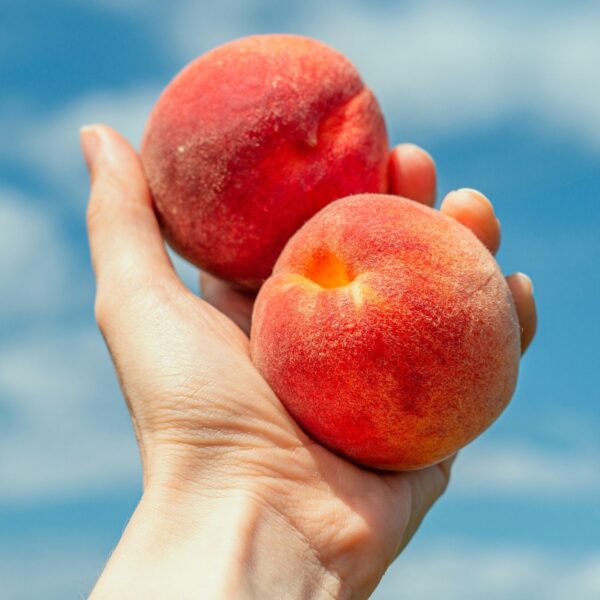
Peaches are synonymous with summer. As the season hits full swing in the Northern Hemisphere, the fuzzy fruits are appearing at farmers’ markets and local produce stands.
But peaches are more than just a tasty treat. They’re an alkalizing fruit that boasts a bevy of bone-building plant compounds, vitamins, and minerals.
In this article, we’ll examine studies showing that the compounds in peaches support bone remodeling, reduce bone-damaging oxidative stress, and help protect against bone loss.
These Health Benefits Are Just Peachy!
Peaches are widely popular fruits, recognizable by their fuzzy peel and sweet white or yellow flesh. They are related to plums, apricots, cherries, and almonds. Peaches are classified as drupes or stone fruit, because the flesh of the peach surrounds a shell containing the fruit’s seed.
Peaches are alkalizing, making them an excellent addition to your bone-healthy pH-balanced diet. Additionally, they are rich in antioxidants– beneficial plant compounds that combat oxidative damage and help prevent the cellular damage that contributes to aging and disease.
Peaches are also notable for their digestive and gut health benefits. One medium-sized peach provides approximately 2.4 grams of fiber, about half of which is soluble and the other half insoluble. Insoluble fiber helps your bowels to function smoothly, while soluble fiber feeds beneficial bacteria. Those bacteria produce short-chain fatty acids that help maintain a healthy gut.1
Peaches support cardiovascular health by improving your balance of cholesterol levels to protect your heart. 2
Peaches also provide benefits common to other fruits, such as reducing the risk of some cancers, likely thanks to their antioxidant content.3
Synopsis
Peaches are alkalizing, antioxidant-rich fruits that support gut health, help protect the cardiovascular system, and can reduce the risk of some cancers.
Eat Your Way to Stronger Bones
Enjoy 200+ delicious, bone-strengthening recipes designed to naturally support bone health—without spending hours in the kitchen. Bone Appétit makes eating for stronger bones simple, satisfying, and stress-free.

Peach Polyphenols That Protect Your Bones
Peaches contain plant compounds that provide significant benefits to your bones, including antioxidant polyphenols and carotenoids that reduce oxidative damage. Oxidative damage occurs when free radicals damage molecules by stealing an electron from them, turning them into free radicals that will continue the cycle of destruction. This process damages the cells responsible for building and maintaining your bones.
Observational studies have associated higher fruit intake– around 240 to 400 grams per day– with greater bone mineral density and lower risk of fractures compared to participants who consumed less fruit.4
Studies have consistently demonstrated that polyphenols improve bone metabolism through a wide range of mechanisms, including antioxidant activity, inhibition of pro-inflammatory cytokines, and increasing the production of osteoblasts while moderating the production of osteoclasts. Osteoblasts are the cells that deposit new bone mass, and osteoclasts reabsorb old bone material.5
Peaches also support bone health by supplying the body with chlorogenic acid. This naturally occurring polyphenol supports bone formation, acts as a bone-protective antioxidant, and reduces bone-damaging inflammation. Research has found that chlorogenic acid promotes osteoblast activity and inhibits osteoclast activity. 6,7
Peaches also contain catechins– antioxidant compounds in the flavonoid family— that protect bone health through a familiar combination of stimulating osteoblasts while inhibiting the bone resorption of osteoclasts. A catechin called epicatechin improves bone microarchitecture by acting on markers of bone formation, including the signalling protein RANKL.
Animal studies have found that catechins increase levels of calcium and the bone-protective glycoprotein osteoprotegerin while regulating transcription factors involved in osteoclast formation.8
Synopsis
The bone-protective compounds in peaches include carotenoids, chlorogenic acid, and catechins. These polyphenolic compounds prevent oxidative damage, reduce inflammation, increase osteoblast formation, and inhibit osteoclast activity.
Putting Peaches To Work For Your Bones
A 2025 study published in the journal Archives of Osteoporosis analyzed the dietary carotenoid intake of 2,053 participants using a 24-hour dietary recall interview and compared that data to their incidence of vertebral fracture. 9 Carotenoids are powerful antioxidant plant compounds that give foods their yellow, orange, and red color.
The researchers found a negative association between dietary carotenoid intake, especially beta-carotene, and vertebral fractures in women. The researchers named carotenoid intake as a “potential dietary prevention tactic for vertebral fractures.”9
Adding peaches to your diet is an excellent way to increase your daily carotenoid intake, especially during the summer when they’re harvested at peak ripeness. You can enjoy peaches on their own or add them to meals and snacks. Try adding chunks of fresh peaches to salads, smoothies, yogurt, or oatmeal.
Peaches ranked sixth on the Environmental Working Group’s 2026 Dirty Dozen list, which ranks the conventional produce samples with the highest levels of pesticide residue. A staggering 99% of conventionally grown peach samples tested positive for pesticides, even after normal washing.
The Save Institute recommends only eating organically grown peaches.
Synopsis
Carotenoid intake is associated with reduced vertebral fracture risk. Peaches are an excellent source of carotenoids. Try them in salads, smoothies, or yogurt bowls. Choose organic peaches whenever possible– they rank sixth on the EWG’s Dirty Dozen list of produce with the highest pesticide residues.
What This Means To You
Adding organic peaches to your summer meals isn’t just delicious; it’s a great strategy for protecting your bones from oxidative damage, maintaining an alkalizing diet, and improving your health.
Your diet plays an enormous role in your bone health, providing the minerals that your body uses to construct new bone tissue and supplying compounds that protect the bone remodeling process. The Save Institute created an entire cookbook and meal planner to help you take full advantage of everything bone-healthy foods have to offer. Bone Appétit contains recipes for all of your favorite dishes, prepared with an ideal mix of nutritious ingredients. With hundreds of bone-building recipes at your fingertips, you’ll never again be at a loss for what to make!
Enjoy the fruits of summer– starting with delicious, organic peaches!
Delicious, Bone-Healthy Meals Made Simple
Support your bones with 200+ easy, flavorful recipes designed to naturally boost bone strength—without spending hours in the kitchen. Bone Appétit takes the guesswork out of eating for bone health, so you can enjoy every meal with confidence.

References
1 https://pmc.ncbi.nlm.nih.gov/articles/PMC10101742/
2 https://pubmed.ncbi.nlm.nih.gov/35761567/
3 https://pubmed.ncbi.nlm.nih.gov/24996346/
4 https://pmc.ncbi.nlm.nih.gov/articles/PMC6520874/
5 https://pmc.ncbi.nlm.nih.gov/articles/PMC12608581/
6 https://www.frontiersin.org/journals/plant-science/articles/10.3389/fpls.2020.562252/full
7 https://pmc.ncbi.nlm.nih.gov/articles/PMC11169668/






Don’t forget the other fuzzy fruit (kiwi) that is also great for bones. I especially like the gold fleshed ones, so I don’t have to eat the prickly skin that the green fleshed ones have. Either are good but make sure they are organic especially if you don’t peel them like me. They are full of three times the vitamin C as an orange and many other necessary nutrients.
Thanks for sharing this information!
Probably a daft query, but do nectarines have the same benefits as peaches.
I love them both, but they also have too many carbs for me for one fresh one, close to 10 carbs each, but both are very low calorie. As for the carotenoids, I would say they both have a lot of them.
I had the recipe book years ago but can’t find it. Is this new recipe collection the same or different?
Dear Brenda,
We are happy to provide you with an answer to your question, so please check your email inbox within the next 24-48 hours.
In excellent health,
Customer Support
I shop at a farmers market and they have organic peaches now. Can’t wait to stock up on them! Thankyou Vivian!
My pleasure, Sharon!
Yum! I love peaches but didn’t know were good for bones. Thank you Vivian!
You’re welcome, Kathy!
Thank you so much Vivian for all you wonderful information. I will be sure to include organic peaches in my diet. They are also delicious!
You’re very welcome, Cheryl! Enjoy!